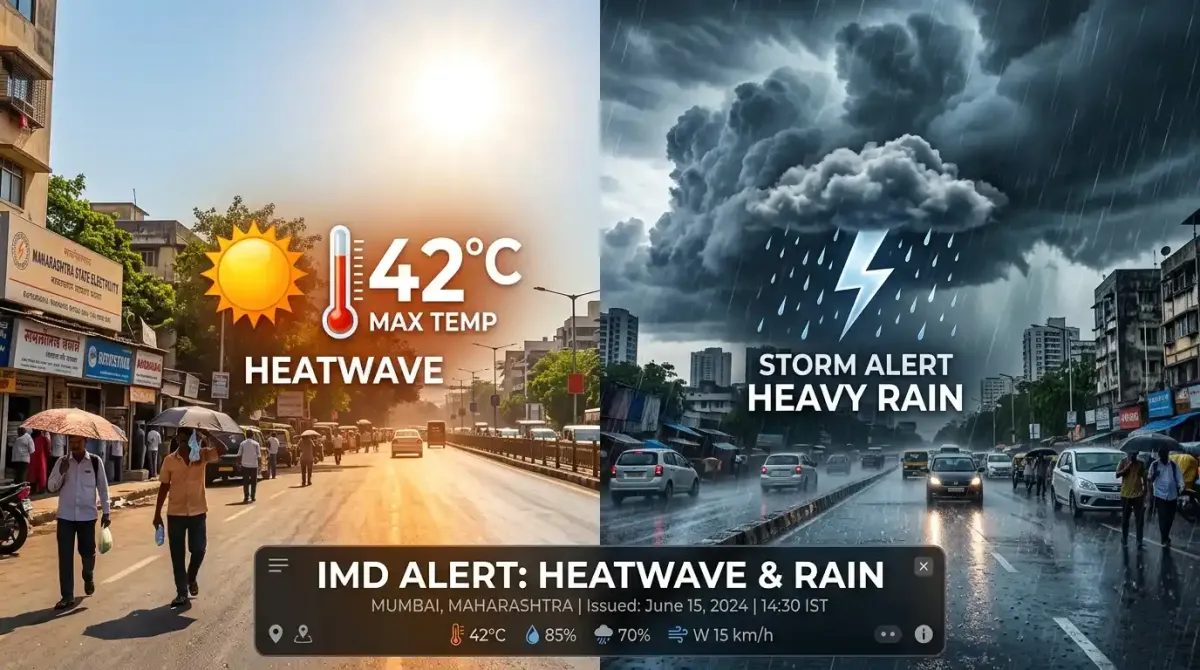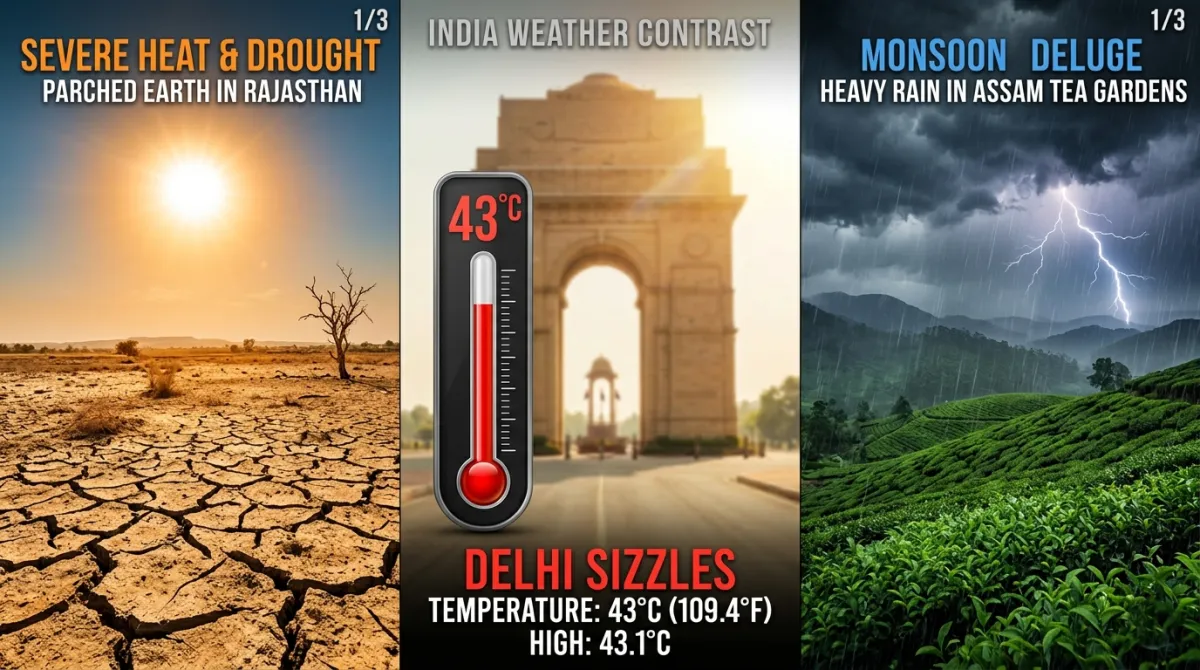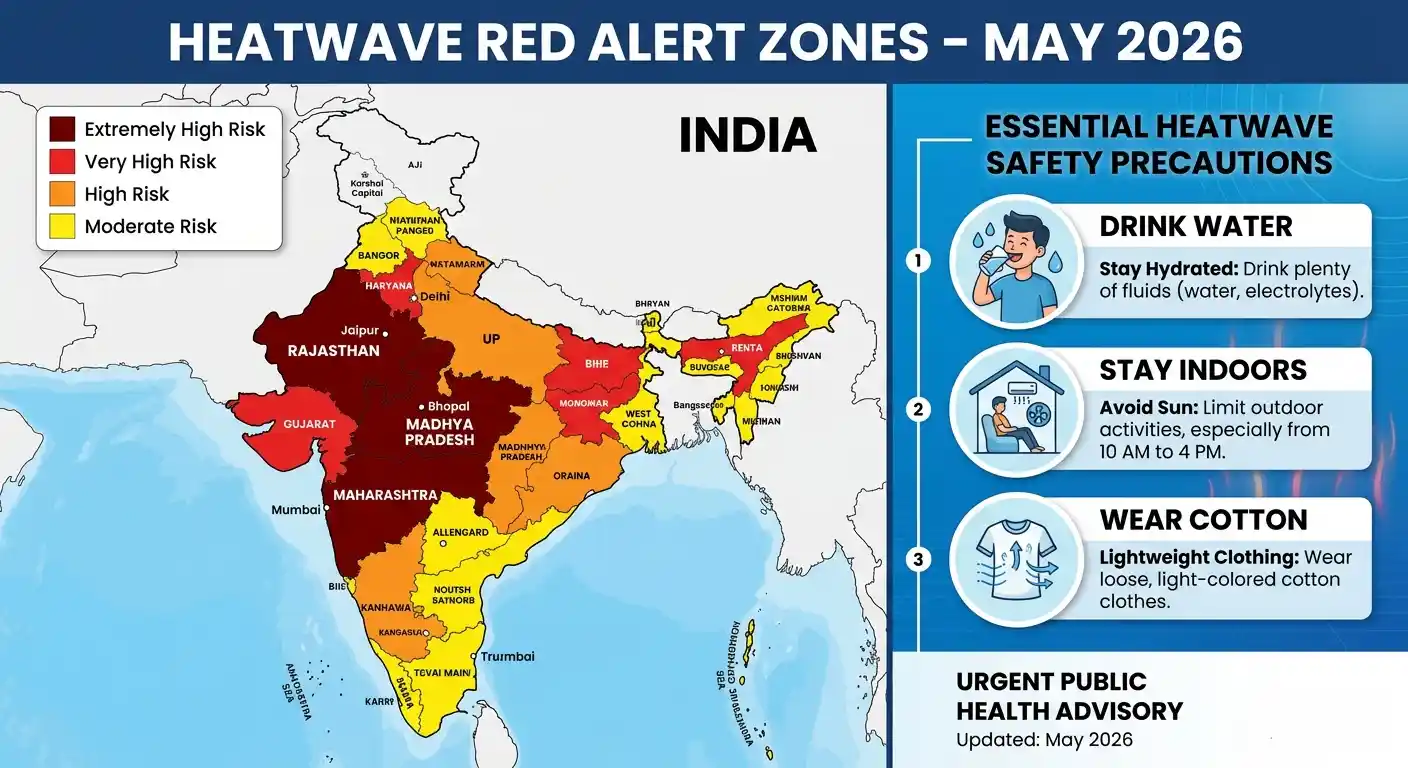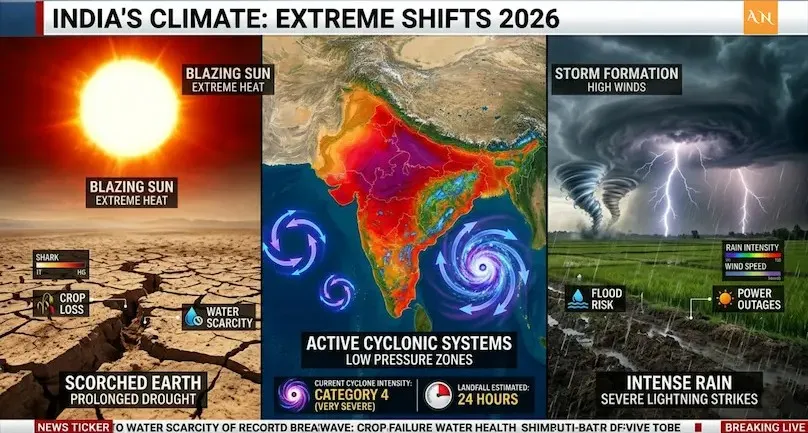
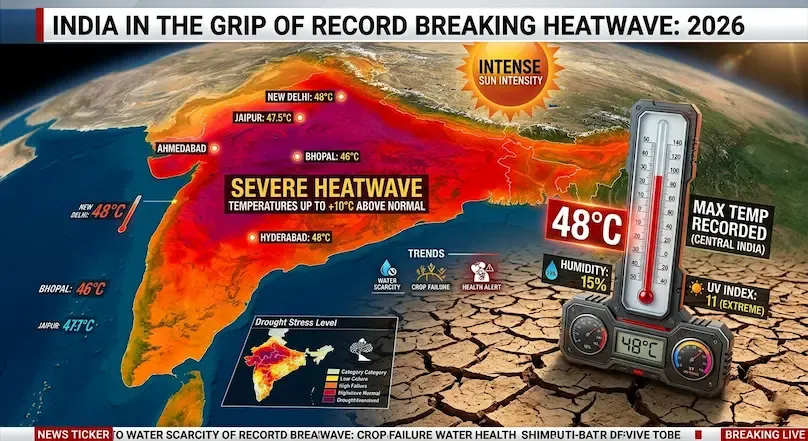
Heat dome phenomenon diagram India 2026 climate crisis - Akhand News.
1. Introduction: India Under a "Lid of Fire"
In May 2026, India isn't just facing a typical summer; it is battling a climate catastrophe. With temperatures consistently crossing 45°C to 48°C in Rajasthan, Vidarbha, and Gujarat, the term "Heat Dome" has become a household name. But what does it mean when the air itself feels like a blowtorch? At Akhand News, we analyze the science behind this extreme heat and why 2026 is becoming the hottest year on record.
2. What is a "Heat Dome"? (The Science of the Lid)
A Heat Dome is a weather phenomenon where a persistent region of high pressure traps heat over a particular area.
- The Pressure Cooker Effect: High pressure acts like a "Lid" on a pot. It pushes the warm air down, compressing it and making it even hotter.
- The Loop: Because the air is trapped, it cannot rise to form clouds or rain, leading to a vicious cycle of rising temperatures and clear, scorching skies.
- Duration: Unlike normal heatwaves, a Heat Dome can stay stationary for weeks, making it extremely dangerous for human health.
3. The El Niño Factor: Adding Fuel to the Fire
Experts believe that the El Niño phenomenon in the Pacific Ocean is a major driver of the 2026 crisis.
- Weak Monsoon Winds: El Niño suppresses the moisture-laden winds that usually provide relief in May/June.
- Global Warming Synergy: When El Niño combines with the already rising global temperatures due to climate change, the result is "Off-the-charts" heat that breaks all previous 100-year records.
4. Region Report: The 45°C+ Zones
- Vidarbha (Maharashtra): Cities like Nagpur and Akola are consistently hitting 46°C+. The "Dry Heat" here is causing massive water scarcity.
- Rajasthan & Gujarat: The desert states are witnessing 48°C+, with Churu and Barmer being the "Hotspots" of the country.
- Central India: Madhya Pradesh and Chhattisgarh are seeing a massive surge in "Heat Stroke" cases in 2026.
5. The Health Crisis: "Wet Bulb" Temperature Danger
In 2026, scientists are worried about the "Wet Bulb Temperature"âthe threshold where the human body can no longer cool itself by sweating.
- Heat Exhaustion: Dizziness, heavy sweating, and rapid pulse.
- Heat Stroke: A medical emergency where the body temperature crosses 104°F (40°C), leading to organ failure.
6. Economic Impact: The "Heat Tax" on the Common Man (2026 Data)
The extreme heat of May 2026 isn't just a health issue; itâs a massive economic burden that experts are calling the "Invisible Heat Tax."
- The Energy Bill Spike: With the Heat Dome trapping hot air, air conditioners and coolers are running 24/7. In states like Maharashtra and Gujarat, average household electricity consumption has jumped by 45% compared to May 2025. For the middle class, this means an additional expenditure of â¹3,000 to â¹5,000 per month just to stay cool.
- Agricultural Ruin (The Zaid Crop Crisis): The early onset of 45°C+ temperatures has scorched the "Zaid" (summer) crops like moong, watermelon, and vegetables. Farmers in Vidarbha are reporting a 30% yield loss because the heat is drying up the soil moisture faster than irrigation can replenish it.
- Gig Economy Slowdown: For India's millions of delivery partners and outdoor laborers, the 12 PM to 4 PM window has become a "Dead Zone." Many platforms have introduced a "Heat Surcharge" to compensate riders, but the overall number of deliveries has dropped, affecting the daily earnings of the poorest workers.
- Food Inflation: As crops fail and transportation costs (refrigerated trucks) rise, the price of basic perishables like tomatoes and leafy greens has spiked in urban markets of Mumbai and Pune.
7. Urban Heat Islands (UHI): Why Pune & Mumbai are Burning
In 2026, the contrast between "Green Cover" and "Concrete Jungle" has never been more evident. This is the Urban Heat Island effect.
- The Concrete Heat Battery: Materials like asphalt (roads) and concrete (buildings) absorb heat during the day and release it slowly at night. This is why cities like Chhatrapati Sambhajinagar are staying at 32°C even at midnight, preventing the human body from recovering.
- Lack of "Green Lungs": For every 10% increase in tree canopy, the local temperature can drop by up to 2°C. However, rapid construction has stripped many Indian cities of their natural shade, creating "Micro-Ovens" in densely populated colonies.
- Glass Buildings & AC Exhaust: Modern glass-facade buildings reflect heat onto the streets, and thousands of AC external units pump hot air back into the narrow lanes, raising the local temperature by an additional 3°C to 5°C compared to open rural areas.
8. Solutions: The 2026 "Heat Action Plan" (HAP) Evolution
To fight the Heat Dome, Indian municipalities are moving beyond simple advisories to Structural Adaptation.
- The "Cool Roof" Mandate: In 2026, several municipal corporations have made "Solar Reflective Paint" mandatory for all new government buildings. These "White Roofs" can reduce indoor temperatures by up to 5°C, reducing the need for mechanical cooling.
- Miyawaki Urban Forests: Under the NHM 2026 guidelines, cities are creating "Mini Forests" using the Miyawaki technique. These dense pockets of native trees act as "Natural Air Conditioners" for the surrounding neighborhoods.
- Water-Mist Systems: In public places like bus stands and markets in Rajasthan and Gujarat, the government has installed high-pressure misting fans that can lower the immediate ambient temperature by 10°C through evaporative cooling.
- Smart Grid Management: To prevent the frequent power outages caused by transformer overheating, AI-driven smart grids are now redistributing power loads in real-time across affected districts.
9. Survival Guide: The 2026 Edition for Extreme Heat
When the temperature hits 48°C, your standard survival tactics must change.
- The "Wet Bulb" Awareness: If the humidity is high along with the heat (like in Mumbai or Gujarat), sweating stops working. In such cases, use a wet towel or a spray bottle on your skin while sitting under a fan.
- Hydration Beyond Water: Plain water isn't enough when you lose salt through heavy sweating. 2026 health experts recommend "Electrolyte-Loading"âadding ORS, coconut water, or traditional Aam Panna (raw mango drink) to your routine to prevent hyponatremia (low sodium).
- The "Internal Cooling" Diet: Avoid high-protein meals (like heavy meats) during the peak afternoon, as the "Thermogenic Effect" of digesting protein raises your internal body temperature. Stick to light, water-rich foods like cucumber and curd.
- Immediate First Aid: If someone shows signs of heatstroke (confusion, red skin, no sweat), move them to shade and apply ice packs to the armpits, groin, and neckâthese are the areas where large blood vessels are close to the skin, helping cool the core temperature faster.
10. FAQ: Common Doubts about Heatwaves
- "Can I get a heatstroke inside my house?" Yes, if the ventilation is poor and the roof is absorbing direct sunlight, indoor temperatures can become lethal, especially for children and the elderly.
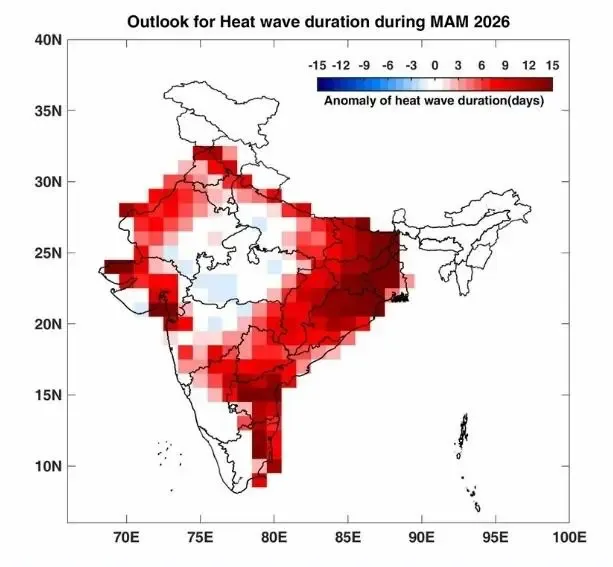
"Is 2026 the new normal?" Unfortunately, climate models suggest that "Heat Dome" events will become 5 times more frequent by 2030. Adaptation (like planting trees and cool roofs) is our only long-term defense.
Read Also: Silent Depression 2026: The Hidden Reality of High-Functioning Depression