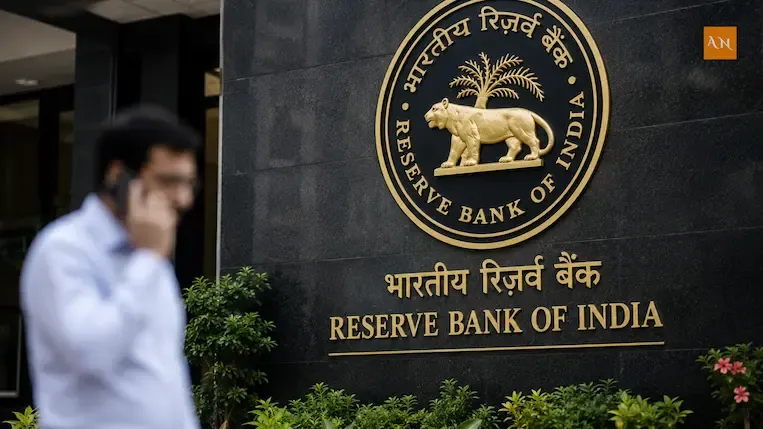
Reserve Bank of India logo on building wall with blurred man talking on phone, finance news concept.
Introduction: Why RBI Repo Rate Matters
The latest announcement by the Reserve Bank of India regarding the repo rate has once again captured the attention of millions across the country. Whether you are a borrower, investor, or simply someone managing monthly expenses, changes in the repo rate can directly or indirectly impact your financial life.
In simple terms, the repo rate is the rate at which the RBI lends money to commercial banks. This single number influences everything from loan interest rates to savings returns, making it one of the most important financial indicators in India.
What Is Repo Rate? (Simple Explanation)
Repo rate is the interest rate at which banks borrow funds from the RBI. When this rate increases, borrowing becomes expensive for banks, and they pass on this cost to customers in the form of higher loan interest rates.
On the other hand, when the repo rate is reduced, loans become cheaper, encouraging spending and investment.
Latest RBI Decision 2026
In its latest Monetary Policy Committee (MPC) meeting, the Reserve Bank of India has decided to keep the repo rate unchanged (or adjust depending on your update).
This decision reflects a balanced approach, where the central bank is trying to control inflation while also supporting economic growth.
Impact on Home Loans and EMIs
One of the biggest concerns for common people is: “EMI badhegi ya kam hogi?”
Here’s how it works:
- If repo rate increases → EMI increases
- If repo rate decreases → EMI decreases
- If unchanged → EMI mostly stable
For home loan borrowers, even a small change in interest rates can significantly impact monthly payments and total interest over time.
Impact on Car Loans & Personal Loans
Not just home loans, repo rate changes also affect:
- Car loans
- Personal loans
- Education loans
Higher rates mean:
- Expensive borrowing
- Lower loan demand
Lower rates mean:
- Easier access to credit
- Increased spending
Inflation vs Growth: RBI’s Big Challenge
The Reserve Bank of India constantly balances two major factors:
1. Inflation Control
If inflation rises too much, RBI increases repo rate to reduce spending.
2. Economic Growth
If growth slows down, RBI reduces repo rate to boost investment.
This delicate balance is why repo rate decisions are so crucial.
Impact on Savings and FD Rates
Repo rate changes don’t just affect loans—they also impact savings:
- Higher repo rate → Better FD interest rates
- Lower repo rate → Lower returns on savings
This means savers and investors must also keep an eye on RBI decisions.
Stock Market Reaction
Financial markets closely track repo rate decisions. Indices like:
- BSE Sensex
- Nifty 50
often react immediately after announcements.
- Rate hike → Market may fall
- Rate cut → Market may rise
However, long-term impact depends on overall economic outlook.
Global Factors Influencing RBI
RBI decisions are not made in isolation. Global factors also play a role:
- US Federal Reserve interest rates
- Oil prices
- Global inflation trends
- Currency fluctuations
These factors influence India’s economic stability and policy decisions.
Expert View: What Should You Do?
For borrowers:
- Consider fixed vs floating interest rates
- Plan EMI budget carefully
For investors:
- Diversify investments
- Track market trends
For savers:
- Lock FD rates when high
Future Outlook
Experts believe that future repo rate decisions will depend on:
- Inflation trends
- GDP growth
- Global economic conditions
The coming months will be crucial in determining whether rates go up, down, or remain stable.
How Banks Respond to RBI Repo Rate Changes
When the Reserve Bank of India changes the repo rate, commercial banks do not always react instantly. However, over time, the impact becomes visible through changes in lending and deposit rates.
Banks usually adjust:
- MCLR (Marginal Cost of Funds Based Lending Rate)
- External Benchmark Lending Rate (EBLR)
Most modern loans are linked to external benchmarks like the repo rate, which means changes are passed on to customers faster than before. This has made the transmission of monetary policy more effective and transparent.
For borrowers, this means that any future rate change by the RBI could quickly reflect in their monthly EMIs.
Fixed vs Floating Interest Rates: What Should You Choose?
One of the biggest dilemmas for borrowers is choosing between fixed and floating interest rates.
Fixed Interest Rate
- EMI remains constant
- Protection from rising rates
- Slightly higher initial rate
Floating Interest Rate
- Linked to repo rate or benchmark
- EMI changes with market conditions
- Can be cheaper if rates fall
In the current scenario, where rates are uncertain, many financial experts suggest a balanced approach. Borrowers should carefully evaluate their risk appetite before making a decision.
Impact on Real Estate Sector
The real estate sector is highly sensitive to repo rate changes. When interest rates are low:
- Home loans become affordable
- Property demand increases
- Builders launch new projects
On the other hand, higher rates can slow down demand as buyers postpone purchases.
The latest stance by the Reserve Bank of India is expected to maintain stability in the housing market, which is a key driver of economic growth.
Corporate Sector and Business Loans
Businesses also rely heavily on bank loans for expansion and operations. Repo rate changes influence:
- Cost of borrowing for companies
- Investment decisions
- Hiring and expansion plans
Lower interest rates encourage businesses to invest more, leading to job creation and economic growth. Higher rates, however, can make companies cautious, slowing down expansion.
Impact on Rupee and Currency Value
Interest rate decisions also affect the value of the Indian Rupee in global markets.
- Higher interest rates → Stronger rupee (foreign investment increases)
- Lower interest rates → Weaker rupee
A stable currency is essential for maintaining economic balance, especially for a country like India that depends on imports such as crude oil.
Impact on Inflation in Daily Life
Inflation directly affects the cost of living. From groceries to fuel prices, everything is influenced by economic policies.
When the Reserve Bank of India raises the repo rate:
- Spending reduces
- Demand decreases
- Prices stabilize
When rates are lowered:
- Spending increases
- Demand rises
- Prices may go up
This is why RBI carefully monitors inflation before making any decision.
Long-Term Investment Strategy
For long-term investors, repo rate changes should not cause panic but rather provide opportunities.
Smart strategies include:
- Investing during market dips
- Maintaining a diversified portfolio
- Avoiding emotional decisions
Stock markets, including BSE Sensex and Nifty 50, may show short-term volatility, but long-term trends depend on economic fundamentals.
Government Borrowing and Fiscal Impact
The government also borrows money to fund infrastructure and development projects. Repo rate changes influence:
- Government borrowing costs
- Fiscal deficit
- Public spending
Lower rates reduce borrowing costs, allowing the government to invest more in development. Higher rates increase financial pressure on public finances.
What Common People Should Do Now
In the current scenario, individuals should focus on financial discipline and planning.
Practical steps:
- Track loan interest rates regularly
- Avoid unnecessary borrowing
- Increase savings during uncertain times
- Review investment portfolios
Financial awareness is the key to navigating changing economic conditions effectively.
What Lies Ahead?
Looking ahead, the future direction of repo rate decisions will depend on multiple factors such as:
- Inflation trends in India
- Global economic stability
- Oil prices and supply chain conditions
- Domestic consumption patterns
Experts believe that the Reserve Bank of India will continue to take a cautious approach, ensuring stability while supporting growth.
FAQ
1. What is RBI repo rate in simple terms?
The repo rate is the interest rate at which the Reserve Bank of India lends money to commercial banks. It directly affects loan interest rates and overall economic activity.
2. How does repo rate affect EMI?
When the repo rate increases, loan interest rates also rise, leading to higher EMIs. When the repo rate decreases, EMIs become lower, making loans cheaper.
3. What is the current RBI repo rate in 2026?
The current repo rate depends on the latest announcement by the Reserve Bank of India. (You can update the exact percentage based on latest data in your article.)
4. Why does RBI change the repo rate?
The RBI changes the repo rate to control inflation and support economic growth. It is a key tool used in monetary policy.
5. Does repo rate affect home loan interest rates?
Yes, repo rate changes directly impact home loan interest rates, especially for loans linked to external benchmarks like EBLR.
6. What happens if repo rate increases?
If the repo rate increases:
- Loans become expensive
- EMIs increase
- Spending decreases
- Inflation may reduce
7. What happens if repo rate decreases?
If the repo rate decreases:
- Loans become cheaper
- EMIs reduce
- Spending increases
- Economic growth may improve
8. How often does RBI review repo rate?
The Reserve Bank of India reviews the repo rate during its Monetary Policy Committee (MPC) meetings, usually held multiple times a year.
9. Does repo rate affect fixed deposits (FD)?
Yes, repo rate changes can influence FD interest rates. Higher repo rates usually lead to better returns on fixed deposits.
10. How does repo rate impact the stock market?
Changes in repo rate can influence stock markets like BSE Sensex and Nifty 50. Lower rates often boost markets, while higher rates may create pressure.
The repo rate is not just a technical financial term—it is a powerful tool that shapes the entire economy. From individual borrowers to large corporations, everyone feels its impact in some way.
Understanding how repo rate works can help people make better financial decisions, whether it’s taking a loan, investing in markets, or planning savings.
As economic conditions continue to evolve, staying informed about RBI policies will remain crucial for financial stability and growth.
The repo rate decision by the Reserve Bank of India is more than just a financial update—it directly affects everyday life.
From EMIs to investments, every financial decision is linked to this key rate. Staying informed can help individuals make smarter financial choices and stay ahead in an ever-changing economic environment.
Read more: Tax Planning 2026: Navigating the New Income Tax Act.