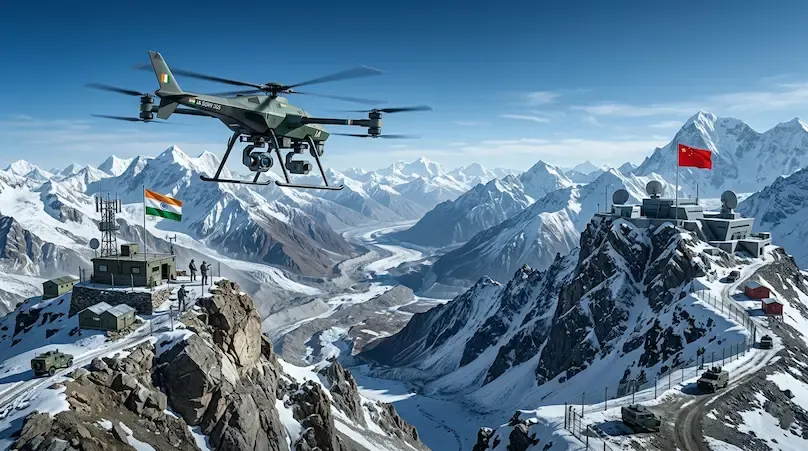
Indian and Chinese soldiers at a border ceremonial meeting point at Nathu La, 2026.
1. Introduction: The Cold Peace of 2026
As of May 2026, the relationship between the world's two most populous nations remains in a state of "Cold Peace." Six years after the Galwan Valley clash, the Line of Actual Control (LAC) remains heavily militarized, even as bilateral trade figures continue to hit record highs. The central paradox of 2026 is how India manages a massive economic dependency on a neighbor it views as its primary security threat.
2. The Border Strategy: "Vibrant Villages" vs. "Xiaokang"
The Himalayan frontier has seen a massive infrastructure transformation over the last year.
- India’s Vibrant Villages Program: India has accelerated the development of border villages in Arunachal Pradesh and Ladakh to prevent migration and strengthen territorial claims.
- Strategic Tunnels & Bridges: The completion of several all-weather tunnels in 2026 has significantly reduced the time required for the Indian Army to mobilize heavy weaponry to forward positions.
- China’s "Xiaokang" Settlements: On the other side, China continues to expand its network of "model villages" along the LAC, which India views as an attempt to "Salami-slice" territory through civilian-military fusion.
3. Trade Relations: The $100 Billion Paradox
Despite the "Boycott China" sentiments and the "Atmanirbhar Bharat" (Self-Reliant India) initiative, the trade reality in 2026 remains complex.
- The Persistence of Imports: India’s dependence on Chinese Active Pharmaceutical Ingredients (APIs), solar components, and electronics remains significant.
- The Trade Deficit: While India has increased exports in iron ore and agricultural products, the trade deficit remains skewed in Beijing's favor, prompting the Indian government to impose stricter anti-dumping duties on Chinese steel and chemicals in early 2026.
- Investment Screening: India maintains a strict "Press Note 3" policy, requiring prior government approval for any investments from countries sharing a land border, effectively limiting Chinese FDI in the Indian tech ecosystem.
4. The Tech War: AI, Semiconductors, and Apps
In 2026, the battlefield has shifted from the mountains to the digital cloud.
- The Great App Ban Legacy: The ban on hundreds of Chinese apps remains in place, allowing Indian domestic startups to dominate the short-video and fintech sectors.
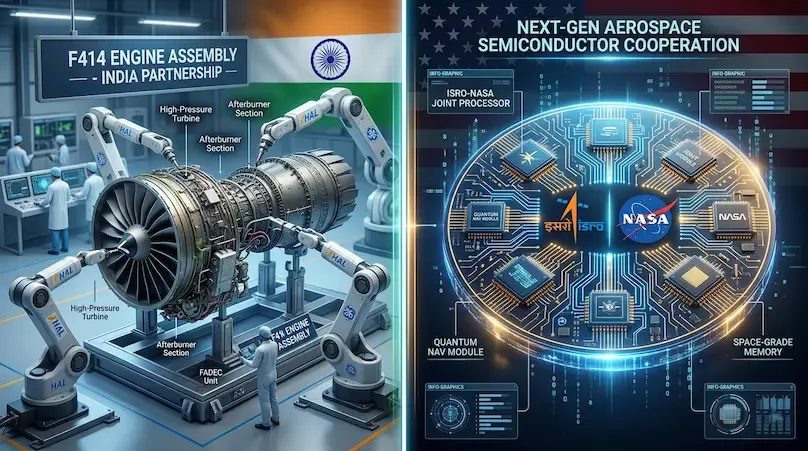
- Semiconductor Sovereignty: India’s push for local chip manufacturing is a direct strategic move to decouple from Chinese supply chains.
- Cybersecurity Threats: Indian intelligence agencies have flagged an increase in state-sponsored cyberattacks targeting the Indian power grid and healthcare systems in early 2026, leading to a new "Cyber Defense Protocol."
5. Geopolitical Posturing: Quad vs. BRICS
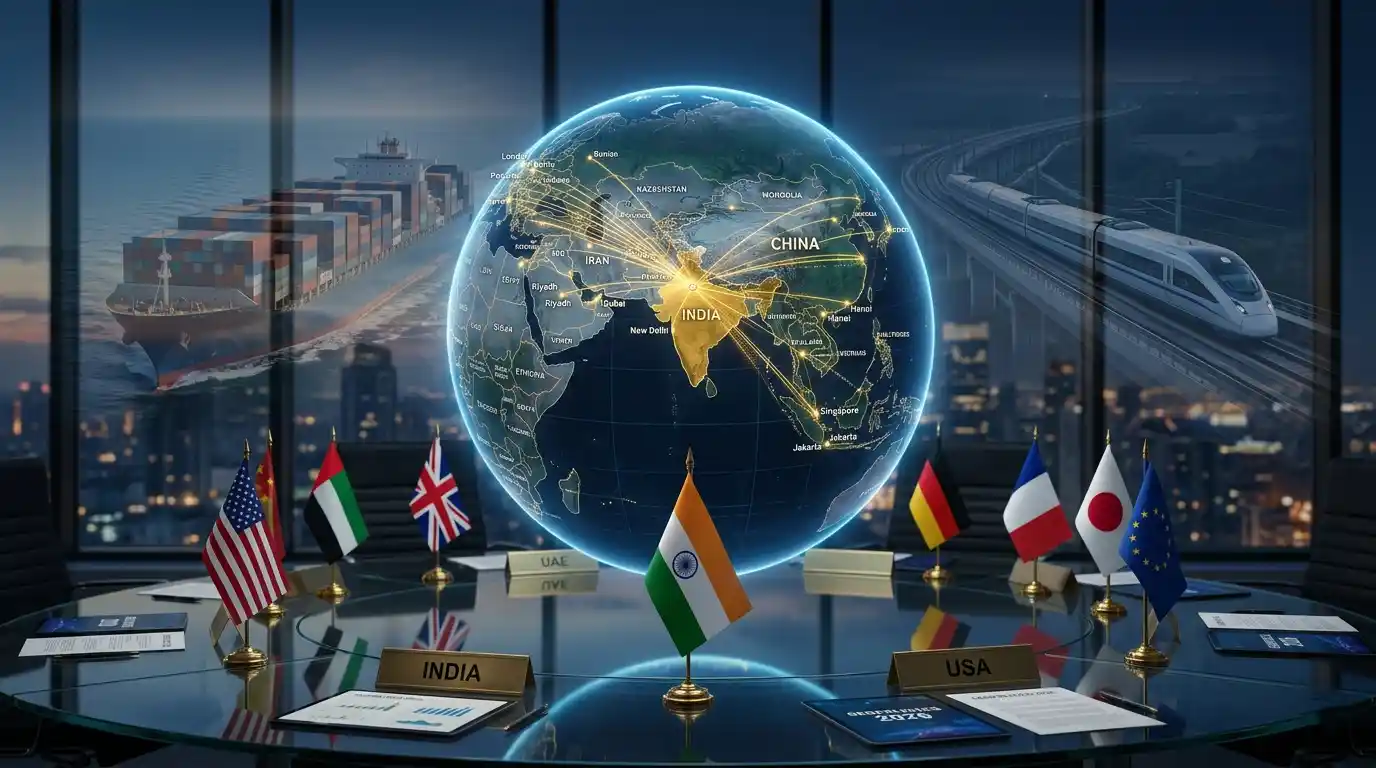
India’s foreign policy in 2026 is a masterclass in "Multi-alignment."
- The Quad Factor: India’s deepening security ties with the US, Japan, and Australia serve as a counterweight to Chinese maritime expansion in the Indian Ocean.
- BRICS & SCO Engagement: Despite bilateral friction, India continues to engage with China in multilateral forums like BRICS to ensure it isn't sidelined in the "Global South" narrative.
6. Water Wars: The Brahmaputra Conflict and Hydro-Hegemony
In 2026, the battle for the Himalayas has extended to the very lifeblood of the region: water. China’s construction of a "Super Dam" on the Yarlung Tsangpo (Brahmaputra) in the Medog County has become a flashpoint for ecological and national security.
- Weaponizing Water: India views China’s upstream control as a potential "Water Bomb." By controlling the flow, Beijing can cause artificial droughts during the summer or flash floods during the monsoon, destabilizing India’s North-Eastern states like Assam and Arunachal Pradesh.
- The 2026 Treaty Push: India has been leading a global diplomatic push for a formal, transparent water-sharing treaty. However, China continues to treat hydrological data as a "State Secret," leading to high-tension diplomatic standoffs in multilateral forums.
- Ecological Fallout: Environmentalists in 2026 warn that these massive dams are being built in a highly seismic zone. A dam failure or an earthquake could lead to a catastrophic deluge that would wipe out downstream biodiversity and human settlements.
7. The "China Plus One" Strategy: India as the Global Manufacturing Alternative
The economic decoupling that began in 2020 has reached its zenith in 2026. The world's largest corporations are no longer willing to "keep all their eggs in one Chinese basket."
- The Electronics Revolution: Driven by the Production Linked Incentive (PLI) schemes, India has become the second-largest mobile phone manufacturer in the world. By May 2026, nearly 25% of all global iPhones and a significant portion of Samsung’s high-end devices are "Made in India."
- Semiconductor Sovereignty: To counter China’s dominance in chips, India’s first major semiconductor fabrication plants (Fabs) have begun trial production in 2026. This reduces the vulnerability of India’s auto and tech industries to Chinese supply chain disruptions.
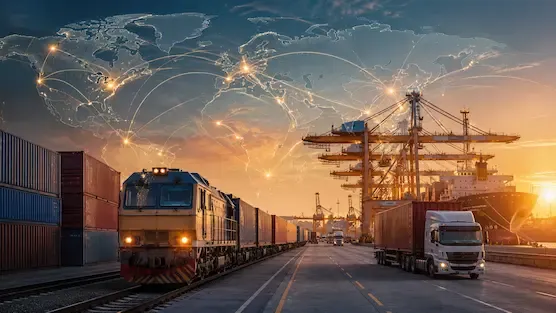
- Logistics & Infrastructure: The success of the "China Plus One" strategy in 2026 is backed by the PM Gati Shakti initiative, which has modernized Indian ports and dedicated freight corridors, making Indian exports competitively priced on the global stage.
8. The Indian Ocean: Maritime "String of Pearls" vs. “Necklace of Diamonds”
While the mountains remain tense, the real 2026 power struggle is playing out in the deep blue waters of the Indian Ocean Region (IOR).
- China’s Encirclement: China continues to expand its "String of Pearls"—a network of military and commercial facilities in ports like Gwadar (Pakistan), Hambantota (Sri Lanka), and Kyaukpyu (Myanmar). In 2026, the presence of Chinese "research vessels" (often viewed as spy ships) in the IOR has become a weekly occurrence.
- India’s Counter-Strategy: India has responded with its "Necklace of Diamonds" strategy, securing access to strategic bases like Duqm in Oman, Changi in Singapore, and the newly developed airstrip in Agaléga (Mauritius).
- The Andaman & Nicobar Shield: In 2026, India has completed the "militarization" of the Andaman and Nicobar Islands, turning them into an "unsinkable aircraft carrier" that can effectively block the Malacca Strait—China’s primary energy supply route—in the event of a conflict.
9. The Himalayan Military Stalemate: Tech & Survival in 2026
The military standoff at 15,000 feet is no longer just about boots on the ground; it is a war of attrition and high-tech surveillance.
- Drone Swarms & AI: Both the Indian Army and the PLA have deployed AI-enabled drone swarms for 24/7 surveillance of the LAC. These drones are capable of operating in sub-zero temperatures and can detect movement even through dense Himalayan fog.
- Stealth Dominance: The Indian Air Force’s Rafale fleet and the indigenous Tejas Mk2 are facing off against China’s J-20 stealth fighters. 2026 has seen an increase in "scrambling" incidents where jets from both sides intercept each other near the border.
- Logistics of Cold: The completion of the Shinku La Tunnel in 2026 has ensured that Ladakh remains connected to the rest of India throughout the winter, a massive strategic advantage that allows for the continuous rotation of troops and supplies.
10. The "Trust Deficit": People, Visas, and Cultural Silence
Beyond the hardware of war, the human connection between India and China has withered in 2026.
- Visa Wars: Obtaining a business or student visa between the two nations is notoriously difficult in 2026. This has severely impacted the education of thousands of Indian medical students who previously studied in China.
- The Narrative War: State-sponsored media on both sides have created a "Trust Deficit" that will take decades to heal. In India, public sentiment remains wary, while in China, the "India Challenge" is often downplayed or used to stoke nationalism.
- The Role of the Diaspora: Indian tech professionals in the US and Europe are playing a silent but crucial role in the "Decoupling" process, often acting as the bridge for Western companies looking to exit China and enter India.
11. The Silicon War: Decoupling the Digital Supply Chain
By May 2026, the battle between India and China has moved beyond physical borders into the microscopic world of semiconductors and Rare Earth Elements (REEs).
- Breaking the REE Monopoly: China currently controls nearly 90% of the world's refined Rare Earth Elements, essential for everything from EV batteries to missile guidance systems. In 2026, India has intensified its "Mineral Diplomacy," signing critical pacts with Australia and the US to build independent processing plants, directly challenging Beijing’s "Resource Weaponization."
- The 6G Race: While China has made massive strides in 6G patents, India’s "6G Vision Document" (2026 edition) focuses on creating an open, secure, and vendor-neutral telecommunications architecture. This "Trusted Source" approach has made Indian tech infrastructure the preferred choice for Western nations wary of Chinese "backdoor" surveillance.
- Software as a Shield: India is leveraging its massive software talent to create AI-driven "Firewalls" for national critical infrastructure. As cyber-skirmishes become a daily reality in 2026, India’s "Cyber Command" is now utilizing indigenous AI to predict and neutralize state-sponsored hacking attempts originating from groups like "RedEcho."
12. The Nuclear Triad & Himalayan Deterrence
The military standoff in 2026 is underpinned by a quiet but intense nuclear modernization by both giants.
- Agni-V and Beyond: India’s successful deployment of Multiple Independently Targetable Re-entry Vehicles (MIRV) technology on the Agni-V has created a "credible deterrent" against China’s major industrial hubs.
- The High-Altitude Silo Race: Satellite imagery in 2026 reveals that China has accelerated the construction of missile silos in the Tibetan plateau. India has countered this by enhancing its second-strike capability through the Arihant-class nuclear submarines, ensuring that any aggression in the Himalayas carries a disproportionate cost.
- Tactical vs. Strategic: There is a growing concern in 2026 regarding the deployment of "Dual-Use" delivery systems—missiles that can carry both conventional and nuclear warheads—making the risk of miscalculation during a border skirmish higher than ever before.
13. The "Two-Front" Challenge: The Pakistan-China Nexus
India’s strategy in 2026 must constantly account for the "Collusive Threat" posed by the China-Pakistan alliance.
- The CPEC 2.0: Despite Pakistan’s internal economic struggles, China has pushed forward with the second phase of the China-Pakistan Economic Corridor (CPEC). In 2026, this is no longer just about roads; it’s about integrated military communication networks that allow the PLA to share real-time intelligence with the Pakistani military.
- Mountain Warfare Synergy: Indian intelligence has noted increased joint high-altitude training exercises between Chinese and Pakistani paratroopers. This forces India to maintain a massive permanent troop presence along both the LAC and the LoC, putting a significant strain on the 2026 defense budget.
- Diplomatic Encirclement: China continues to use its veto power at the UN to protect Pakistan-based assets, while India utilizes its growing influence in the "Global South" to isolate state-sponsored terror narratives, creating a permanent diplomatic tug-of-war.
14. Psychological Warfare and the “Information Iron Curtain”
In 2026, the war is also being fought in the minds of the citizens through sophisticated disinformation campaigns.
- Deepfake Diplomacy: 2026 has seen a rise in "Deepfake" videos used to incite panic during border standoffs. Indian authorities have had to set up "Rapid Fact-Check" units to debunk AI-generated videos showing "surrendering" soldiers or "captured" outposts.
- The Great Firewall vs. The Open Internet: While Chinese citizens are fed a curated diet of "Himalayan Victories" through Weibo and Douyin, India’s open internet allows for a more diverse—but also more vulnerable—information landscape.
- Soft Power Supremacy: India is countering Chinese state-narratives by promoting "Himalayan Culture" globally—highlighting Buddhism, Yoga, and local traditions of Ladakh and Arunachal Pradesh—to reinforce its historical and cultural claim to the regions.
Conclusion: The Long Game of the 21st Century
The India–China relationship of 2026 is no longer a localized border dispute; it is the defining rivalry of the Asian Century. While the "Cold Peace" holds for now, the structural competition in trade, technology, and maritime influence is accelerating. India’s strategy of "Armed Coexistence" reflects a nation that is no longer afraid to stand its ground while building the economic muscle required to eventually move from a defensive posture to one of regional leadership. The mountains may be quiet, but the gears of a global power shift are turning faster than ever.
Also Read: India’s Fiscal Deficit 2026: Balancing Growth with Fiscal Discipline