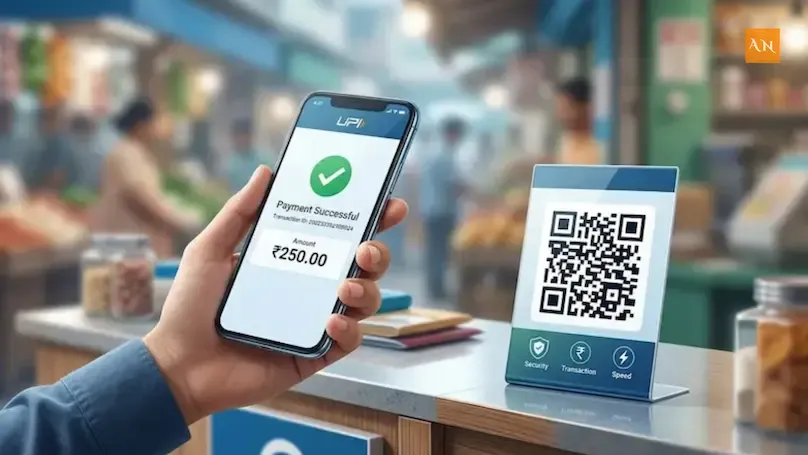
UPI payment 2026 new rules smartphone QR code digital transaction India. illustration
Introduction: India’s Digital Payment Revolution
India has witnessed a massive transformation in digital payments over the last few years. At the center of this revolution is UPI (Unified Payments Interface), managed by the National Payments Corporation of India.
From small tea stalls to large retail chains, UPI has become the most preferred mode of payment. With millions of transactions happening daily, any update in UPI rules directly impacts users across the country.
What is UPI and Why It Matters?
UPI is a real-time payment system that allows users to transfer money instantly between bank accounts using mobile apps.
Key benefits include:
- Instant money transfer
- 24/7 availability
- No need for bank details
- Simple QR code payments
Its simplicity and speed have made it a backbone of India’s digital economy.
UPI New Rules 2026: What’s Changed?
The latest updates by the National Payments Corporation of India focus on improving security, efficiency, and scalability.
Key highlights:
- Revised transaction limits
- Enhanced fraud detection systems
- Improved server uptime
- Better user experience
These changes aim to make digital payments safer and more reliable.
UPI Transaction Limit Changes
One of the most discussed updates is the change in transaction limits.
Current scenario:
- Standard limit: ₹1 lakh per day
- Higher limits for specific categories (like IPOs, hospitals)
The new rules may introduce:
- Category-based limits
- Increased caps for verified users
This flexibility helps users make larger transactions when needed.
Security Upgrades in UPI
Security remains a top priority for the National Payments Corporation of India.
New security features include:
- Advanced fraud detection algorithms
- Multi-factor authentication
- Real-time transaction monitoring
These measures aim to reduce cyber fraud and protect users’ money.
Autopay and Recurring Payments Update
UPI autopay is becoming increasingly popular for subscriptions like:
- OTT platforms
- Utility bills
- Loan EMIs
The new rules focus on:
- Better mandate management
- Transparent notifications
- Easy cancellation options
This ensures users have more control over automatic payments.
Impact on Users and Businesses
For Users:
- Faster transactions
- Better security
- Higher limits
For Businesses:
- Increased digital adoption
- Smooth payment processing
- Reduced dependency on cash
These changes strengthen India’s move toward a cashless economy.
Role of Banks and Apps
UPI works through banks and popular apps like:
- Google Pay
- PhonePe
- Paytm
With new rules, these platforms are expected to upgrade their systems for better performance and security.
Digital Payments Growth in India
India is one of the fastest-growing digital payment markets in the world. UPI has played a major role in this growth.
Factors driving adoption:
- Smartphone penetration
- Internet availability
- Government initiatives
The new updates will further accelerate this growth.
Challenges and Concerns
Despite its success, UPI still faces some challenges:
- Cyber fraud risks
- Server downtime issues
- Lack of awareness in rural areas
The latest rules aim to address these concerns effectively.
Future of UPI and Digital Payments
The future of UPI looks extremely promising. Experts predict:
- Higher transaction volumes
- International expansion
- Integration with new technologies
UPI could soon become a global payment standard.
How UPI Works Behind the Scenes
While UPI looks extremely simple from a user’s perspective, the technology behind it is highly advanced. The system is built and managed by the National Payments Corporation of India, which connects multiple banks into a single real-time payment network.
When a user initiates a transaction:
- The request is sent through the UPI app
- It is verified by the bank servers
- NPCI processes the request
- Funds are transferred instantly
All of this happens within seconds, making UPI one of the fastest payment systems globally.
Growth of UPI Transactions in India
UPI has seen explosive growth over the years. From a few million transactions in its early days, it has now reached billions of transactions every month.
Key growth drivers:
- Increased smartphone usage
- Affordable internet
- Government push for digital payments
- Ease of use
This growth has positioned India as a global leader in digital payment innovation.
International Expansion of UPI
UPI is no longer limited to India. The National Payments Corporation of India has been working on expanding UPI services internationally.
Countries where UPI is being explored or implemented include:
- UAE
- Singapore
- France
- Nepal
This expansion allows Indian travelers to make seamless payments abroad and boosts India’s fintech reputation globally.
Tips to Stay Safe While Using UPI
Even with strong security measures, users must stay cautious.
Important safety tips:
- Never share your UPI PIN
- Avoid clicking unknown links
- Verify receiver details before payment
- Use official apps only
Cyber fraud is evolving, and awareness is the best protection.
Role of Fintech Innovation
UPI has also fueled innovation in India’s fintech sector. Startups and companies are building new features on top of UPI, such as:
- Credit on UPI
- Buy Now Pay Later (BNPL)
- Voice-based payments
- AI-powered fraud detection
These innovations are making digital payments smarter and more accessible.
Impact on Small Businesses and Street Vendors
One of the biggest success stories of UPI is its adoption among small businesses and street vendors.
Earlier, digital payments were limited to large businesses. Today:
- Even small shops accept QR payments
- No need for expensive POS machines
- Instant settlement improves cash flow
This has empowered millions of small entrepreneurs across India.
Cash vs Digital: Changing Consumer Behavior
UPI has significantly reduced dependence on cash.
Before UPI:
- Cash transactions dominated
- Limited digital adoption
After UPI:
- Cashless payments increasing
- Faster and transparent transactions
- Better financial tracking
This shift is helping India move toward a more formal and transparent economy.
Government Support and Policies
The Indian government has played a key role in promoting digital payments.
Initiatives include:
- Digital India campaign
- Incentives for cashless transactions
- Support for fintech startups
These policies, combined with UPI updates, are strengthening the country’s digital infrastructure.
Impact on Banking Sector
UPI has transformed traditional banking systems.
Positive impacts:
- Reduced branch dependency
- Faster transactions
- Increased customer engagement
Challenges:
- Reduced transaction fees for banks
- Increased competition from fintech apps
Banks are now adapting by offering better digital services.
Future Innovations in UPI
The next phase of UPI could include:
- Offline payments (without internet)
- Voice-enabled transactions
- Integration with wearable devices
- Cross-border real-time payments
These innovations will make UPI even more powerful and user-friendly.
What Users Should Expect Next
Users can expect:
- More secure apps
- Faster transaction processing
- Higher limits for trusted users
- Seamless global payments
The focus will remain on convenience and safety.
FAQ:
1. What are the new UPI rules in 2026?
The new UPI rules introduced by the National Payments Corporation of India focus on higher transaction limits, improved security, and better user experience.
2. What is the daily UPI transaction limit in India?
The standard UPI transaction limit is generally ₹1 lakh per day, but it can vary depending on the bank and transaction type.
3. Are there any charges on UPI transactions?
Most UPI transactions are free for users. However, certain merchant or high-value transactions may have charges depending on policy updates.
4. Is UPI safe for digital payments?
Yes, UPI is considered safe as it uses multi-layer authentication and secure banking systems managed by the National Payments Corporation of India.
5. What should I do if a UPI payment fails?
If a payment fails, the amount is usually reversed automatically within a few hours. If not, users should contact their bank or UPI app support.
6. Can UPI be used internationally?
UPI is gradually expanding globally, and it is already available in select countries through partnerships led by the National Payments Corporation of India.
7. What is UPI Autopay and how does it work?
UPI Autopay allows users to set up automatic recurring payments for services like subscriptions, EMIs, and bills with prior authorization.
8. Which apps support UPI payments?
Popular UPI apps include:
- Google Pay
- PhonePe
- Paytm
9. How can I increase my UPI transaction limit?
UPI limits are set by banks and NPCI. Some users may get higher limits for specific categories like IPO payments or verified accounts.
10. What precautions should I take while using UPI?
Users should never share their UPI PIN, avoid unknown links, verify payment details, and use only trusted apps to stay safe.
UPI has already transformed the way India transacts, and the new rules introduced by the National Payments Corporation of India are set to take this transformation to the next level.
From enhanced security to improved user experience, every update is designed to make digital payments more efficient and trustworthy.
As India continues its journey toward a digital economy, UPI will remain at the core of this revolution. For users, businesses, and policymakers alike, understanding these changes is essential to fully benefit from the evolving financial ecosystem.
The new UPI rules introduced by the National Payments Corporation of India mark another significant step in India’s digital journey.
With improved security, higher limits, and better user experience, these updates are set to benefit both individuals and businesses.
As digital payments continue to evolve, staying informed about such changes is essential for making smarter financial decisions.
Read more: RBI Repo Rate 2026: EMI Increase or Decrease? Latest Decision Explained