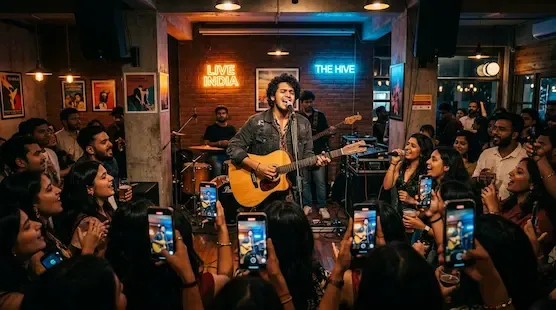
Young independent musicians performing live at a modern urban café concert in India while a youthful audience enjoys acoustic indie music in a warm cinematic atmosphere representative image.
Step into any packed microbrewery in Pune, a college festival in Mumbai, or a crowded cafe in Chhatrapati Sambhajinagar on a weekend, and the background score is no longer dominated by high-budget Bollywood item numbers or recycled film remixes.
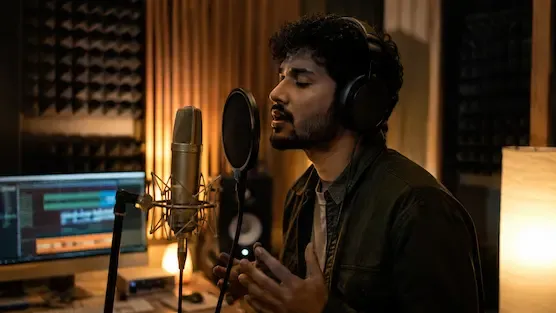
Instead, thousands of youngsters are singing along, word for word, to acoustic guitar notes or raw, hyper-local hip-hop verses composed by independent artists in home studios. India’s independent music scene—popularly known as the "Indie Scene"—has quietly graduated from a niche underground movement into the primary soundtrack of urban youth culture.
This massive cultural shift is reshaping the economics of the Indian entertainment sector, breaking a decades-old system where an artist's success was entirely dependent on a Bollywood film contract.
The Algorithm Democracy: How Streaming Empowered the Artist
The primary weapon driving this indie revolution is the democratization of music distribution through global audio streaming algorithms. Historically, major film production houses controlled the radio waves and television music channels, leaving independent creators with zero distribution infrastructure.
Modern platforms like Spotify, YouTube Music, and Apple Music have completely bypassed these traditional gatekeepers.
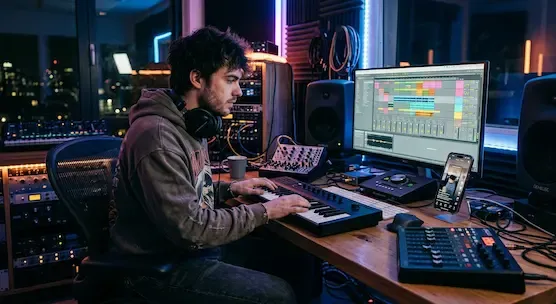
By pushing curated, mood-based playlists directly to users based on their listening habits, algorithms are allowing independent singer-songwriters and regional hip-hop artists to build millions of cumulative streams directly from their bedrooms.
Gen-Z and millennial listeners note that Bollywood music has become highly predictable, relying heavily on old remixes and formulaic electronic beats. Independent tracks, on the other hand, focus deeply on raw vulnerability, mental health, heartbreak, and real-world struggles, allowing listeners to form an intense, personal connection with the artist.
The shift isn't just digital; it is heavily visible on the ground through the explosive growth of the live music industry. Multi-city music festivals and intimate club tours are witnessing strong audience turnout.
Young Indians are moving away from traditional movie theaters and are increasingly willing to spend premium ticket prices to experience their favorite indie artists live in concert.
Independent artists discovered through reels and streaming playlists are now filling club venues across major cities.
This massive ticket-buying culture has turned independent music into a highly sustainable, self-funded business ecosystem where artists retain greater creative independence over their intellectual property.
Entertainment industry financial analysts point out that the financial center of gravity has shifted. Indie artists are no longer treating live shows as a side hobby; it is their primary revenue engine.
Brands and corporate sponsors are rapidly diverting their marketing budgets away from movie star endorsements and directly into independent music festivals to capture the active attention of the country's youth.
Also Read: Peddi Trailer Sparks Massive Buzz: Ram Charan’s Rugged Transformation Takes Over the Internet
Despite the massive scale-up, navigating the independent landscape remains highly challenging for upcoming talent. As corporate record labels rush to sign breakout indie artists, concerns regarding copyright ownership, unfair royalty distribution models, and long-term contract lock-ins are triggering major legal discussions within the musician community.
The rise of India’s independent music scene is a beautiful sign of a culturally mature youth that values authenticity over synthetic star power. Bollywood will always remain a massive commercial vehicle, but its absolute monopoly over the country's musical soul has is no longer as dominant as before.
When the youth choose to support an independent artist's raw story over a multi-crore corporate film track, they are not just changing their playlists—they are liberating Indian art.