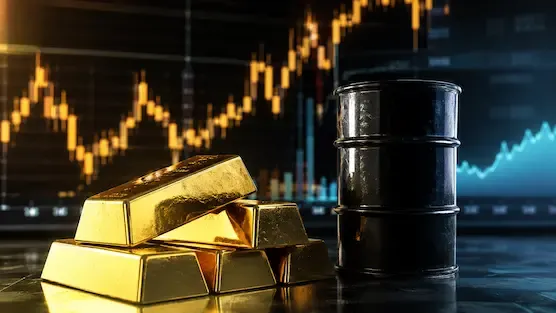
Gold bars and crude oil barrel representing rising commodity market prices amid global economic uncertainty.
Commodity markets are once again under pressure as rising geopolitical tensions and global supply concerns push investors toward safer assets and energy prices higher.
Over the past few weeks, international oil prices have strengthened sharply while gold markets have witnessed renewed volatility. Analysts say the latest movements are being driven by a combination of Middle East instability, tighter energy supplies, inflation concerns, and growing uncertainty across global financial markets.
For ordinary consumers, however, the effects are not limited to trading screens or commodity exchanges. Higher oil and gold prices eventually influence transportation costs, household inflation, fuel bills, jewellery demand, and even broader economic sentiment.
The latest rally highlights how deeply connected global commodity markets have become to international geopolitics.
Oil Markets React to Rising Tensions
Crude oil prices have moved upward following renewed instability linked to Iran and broader regional security concerns.
According to recent international market reports, Brent crude prices climbed above $92 per barrel as investors reacted to fears of possible supply disruptions and shipping risks in the Middle East. Market analysts pointed to tightening inventories and uncertainty around key oil routes as major drivers behind the latest surge.
The Strait of Hormuz remains one of the most strategically important energy corridors in the world, carrying a significant share of global crude shipments. Any disruption in this region tends to trigger immediate reactions across energy markets.
At the same time, global oil inventories have reportedly continued declining, adding further support to prices. Traders believe supply conditions could remain tight if geopolitical tensions continue escalating.
For countries like India, which import large volumes of crude oil, rising prices create additional economic pressure. Higher import costs can eventually affect fuel prices, logistics expenses, aviation costs, and inflation across multiple sectors.
Gold Returns as a Safe-Haven Asset
While oil reacts mainly to supply concerns, gold often behaves differently during periods of uncertainty.
Investors worldwide traditionally move toward gold during geopolitical instability because it is viewed as a relatively safer store of value compared to volatile equity markets or currencies.
Recent market reports show that gold demand has remained strong despite price fluctuations. Analysts continue to monitor safe-haven buying activity as tensions in global markets increase.
In India, however, the gold market is facing an additional challenge.
The government recently increased import tariff values for gold and silver in response to changing global commodity conditions. Industry reports suggest the move was aimed partly at managing import costs and reducing pressure on foreign exchange reserves.
At the same time, higher duties and elevated international prices have reportedly revived concerns about illegal gold smuggling. According to Reuters reporting, India's recent tariff hike has significantly altered domestic market dynamics and increased pressure on legal import channels.
The result is a complex environment where investors continue showing interest in gold, but consumers face rising costs.
Why Commodity Prices Matter Beyond Investors
Commodity price movements affect far more than traders and financial institutions.
When oil prices rise, transportation and manufacturing costs typically increase as well. These costs eventually flow into consumer prices through higher logistics expenses and supply chain pressures.
Similarly, gold prices hold special importance in India due to the country's large jewellery market and cultural demand. Rising bullion prices often influence wedding spending, household purchasing decisions, and retail demand patterns.
Economists also closely monitor commodities because they can act as indicators of broader economic stress. Sharp increases in oil or precious metals sometimes reflect fears related to inflation, currency weakness, or geopolitical instability.
This is why commodity movements are watched not only by investors, but also by governments, central banks, and policymakers.
Also Read: India's Stock Market Boom: NSE Crosses 26 Crore Trading Accounts
Are Markets Entering Another Commodity Cycle?
Some analysts believe the current environment could signal the beginning of another extended commodity cycle, particularly if geopolitical risks persist and supply chains remain under pressure.
Others argue that markets may continue experiencing sharp volatility rather than a sustained long-term rally.
Much will depend on future developments in global diplomacy, energy production, shipping stability, and central bank policies. Commodity markets tend to react quickly to headlines, making short-term forecasting extremely difficult.
Still, the recent price action demonstrates that commodities remain deeply sensitive to global political developments.
The latest movements in gold and oil markets show how closely commodities are tied to global uncertainty.
For consumers, rising prices are not merely financial statistics—they eventually influence daily life through fuel costs, inflation, transportation expenses, and household purchasing power.
As geopolitical tensions continue shaping international markets, commodities are once again becoming one of the clearest indicators of global economic anxiety. Whether the current rally becomes a long-term trend or a temporary reaction, the impact on economies like India will remain significant.