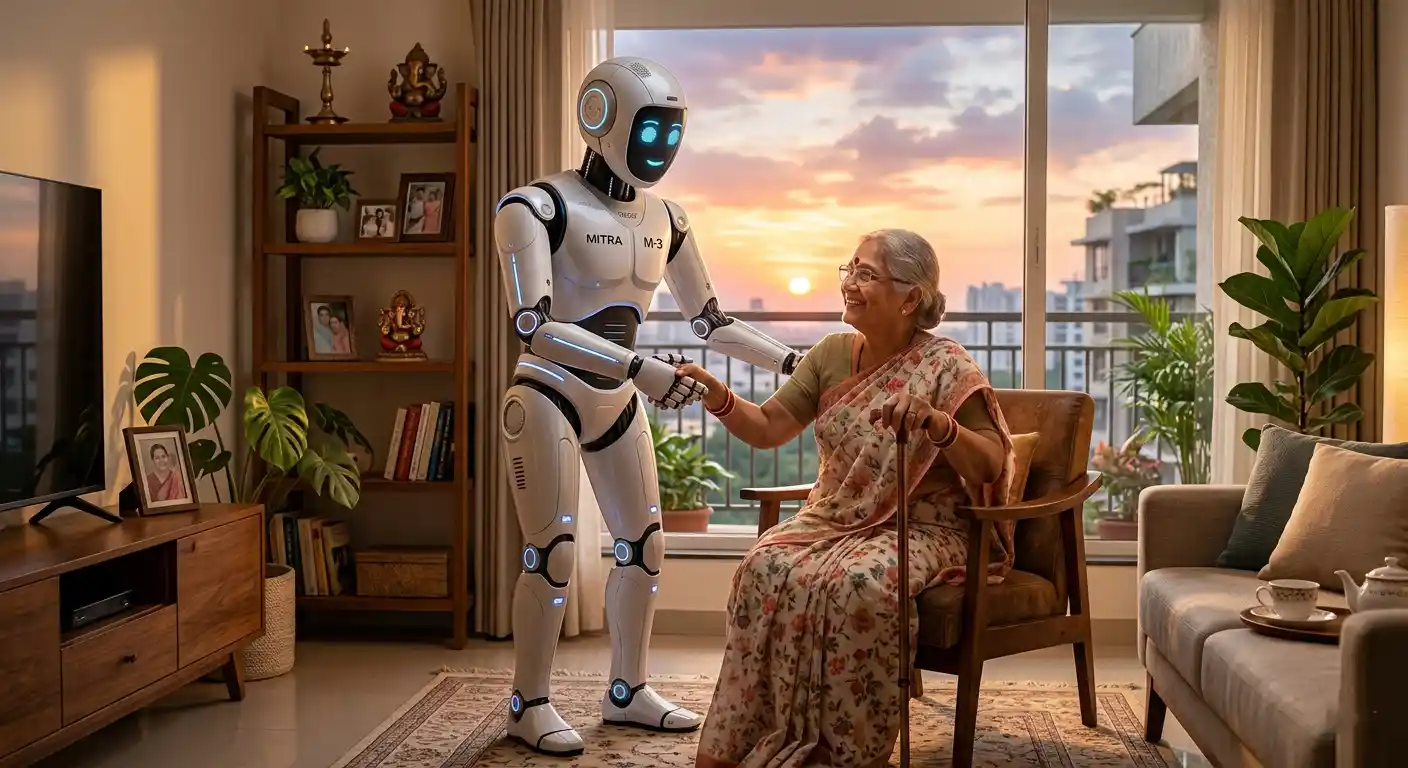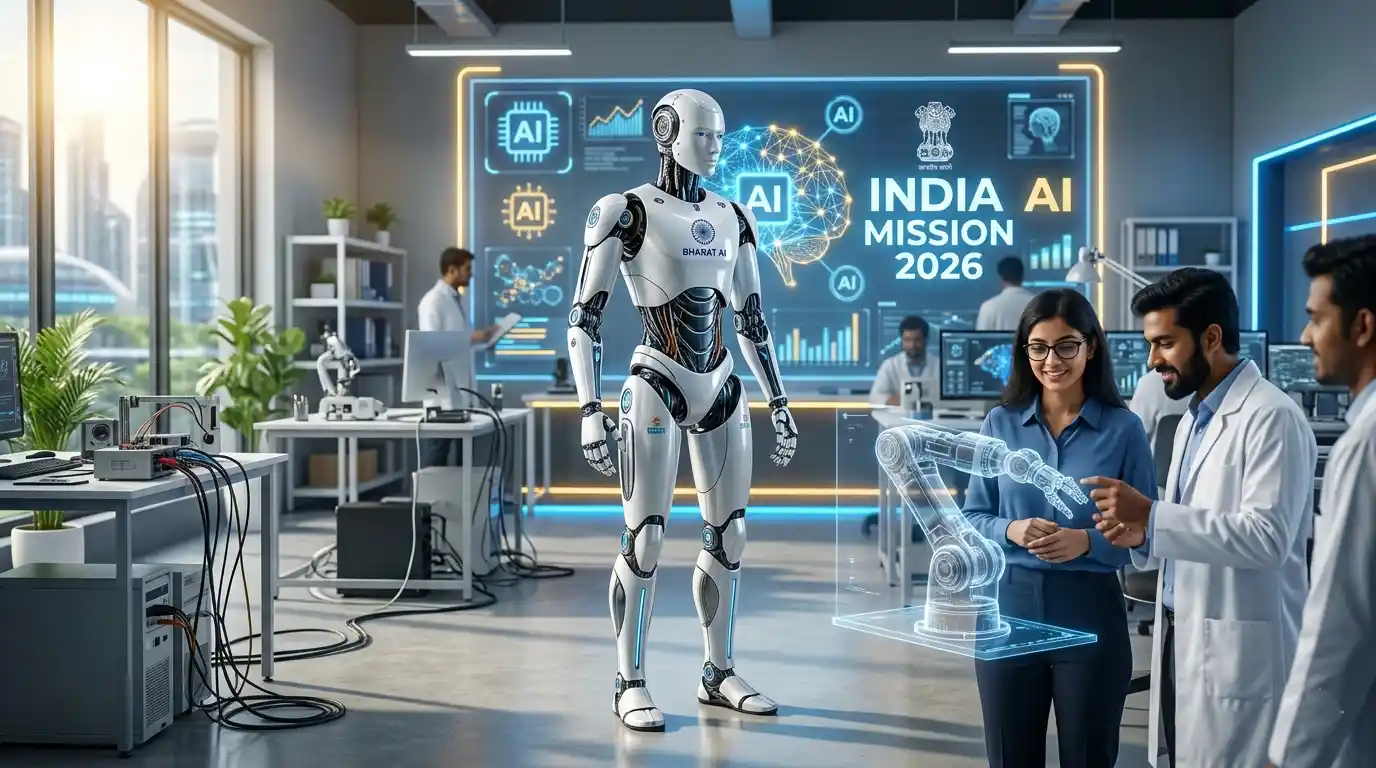
Intelligent autonomous robots operating inside a modern technology-driven industrial environment.
For decades, robots belonged to the world of science fiction.
They were imagined as futuristic machines working inside advanced laboratories or helping astronauts explore distant planets. In reality, however, industrial robots spent most of their lives hidden behind factory walls, performing repetitive manufacturing tasks far away from public attention.
That reality is beginning to change.
A new generation of intelligent machines powered by artificial intelligence is moving beyond traditional assembly lines and entering places that ordinary people interact with every day. From hospitals and warehouses to farms and airports, robots are gradually becoming an active part of the modern economy.
Technology experts increasingly describe this transformation as the rise of "Physical AI"—the moment when artificial intelligence gains the ability not only to process information but also to interact with the physical world.
Also Read: AI Is Managing More of Your Life Than You Think — And Most People Don't Even Notice
From Digital Intelligence to Physical Intelligence
The first wave of artificial intelligence largely existed on screens.
AI systems could write emails, summarize documents, translate languages, and answer questions. Generative AI tools changed the way people work, study, and create content, but they remained digital assistants.
Physical AI takes that concept one step further.
Instead of simply generating text or images, intelligent robots combine machine learning, computer vision, advanced sensors, and real-time decision-making to understand and respond to their surroundings.
A warehouse robot can identify obstacles, calculate the fastest route, and transport goods without direct human control. A service robot in a hospital can deliver medicines and supplies while navigating crowded hallways. Agricultural robots can monitor crop health and assist with precision farming.
The intelligence is no longer confined to software—it is becoming mobile.
Warehouses Are Leading the Revolution
One of the biggest drivers behind modern robotics is the global logistics industry.
As e-commerce continues to expand, companies face increasing pressure to move products faster and more efficiently. Autonomous mobile robots are now being used in distribution centers around the world to transport inventory, organize storage systems, and support human workers.
Rather than replacing entire workforces, many experts argue that these machines are handling repetitive and physically demanding tasks, allowing employees to focus on operations that require judgment, supervision, and customer interaction.
This combination of human decision-making and robotic efficiency is becoming the foundation of next-generation supply chains.
Also Read: The Robotics Dawn 2026: How AI-Powered Humanoids are Redefining Daily Life and Industry
Hospitals and Healthcare Are Adopting AI Robots
Healthcare is another sector experiencing rapid technological change.
Hospitals in several countries already use robotic systems to transport medical equipment, disinfect rooms with ultraviolet technology, and assist surgeons during highly specialized procedures.
Artificial intelligence also allows robots to recognize objects, follow designated routes, and perform routine support functions with increasing accuracy.
As populations age and healthcare systems face growing pressure, many researchers believe intelligent robotics could become an important tool for improving operational efficiency while supporting medical professionals.
Agriculture and Smart Farming
The impact of robotics is not limited to cities.
Modern agriculture is increasingly adopting AI-powered technologies to improve productivity and resource management. Autonomous machines equipped with cameras and sensors can monitor soil conditions, identify plant diseases, and optimize irrigation systems.
Precision farming allows farmers to use water, fertilizers, and pesticides more efficiently, reducing waste while increasing crop yields.
For countries with large agricultural sectors, these technologies may play a significant role in strengthening food security over the coming decades.
Despite the excitement surrounding robotics, experts caution that widespread adoption also raises important questions.
Workforce adaptation, data privacy, cybersecurity, and ethical decision-making remain active areas of discussion. Governments, businesses, and technology developers are working to establish regulations that encourage innovation while protecting public interests.
Another common concern is whether robots will eliminate jobs.
Also Read: The New Digital Scam Economy: How Fake Loan Apps and OTP Frauds Are Trapping Indians
Many economists argue that previous technological revolutions have often changed the nature of work rather than eliminating it entirely. New industries create demand for engineers, technicians, software specialists, maintenance professionals, and AI trainers, even as routine tasks become increasingly automated.
The challenge will be helping workers adapt to these changing skill requirements.
The history of technology shows that the most significant innovations often arrive quietly.
The internet transformed communication. Smartphones changed daily life. Artificial intelligence reshaped the digital world.
Now, intelligent robotics appears to be taking the next step by bringing AI into the physical environment around us.
The Physical AI Revolution is not about machines replacing humanity. It is about creating tools that can assist people, improve productivity, and solve increasingly complex challenges.
The robots of the future may not look like science-fiction heroes.
Instead, they may simply become another invisible technology working quietly in the background of everyday life.