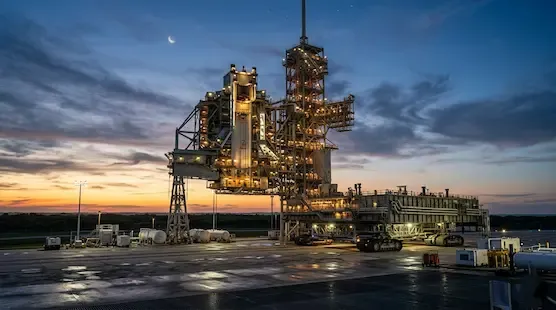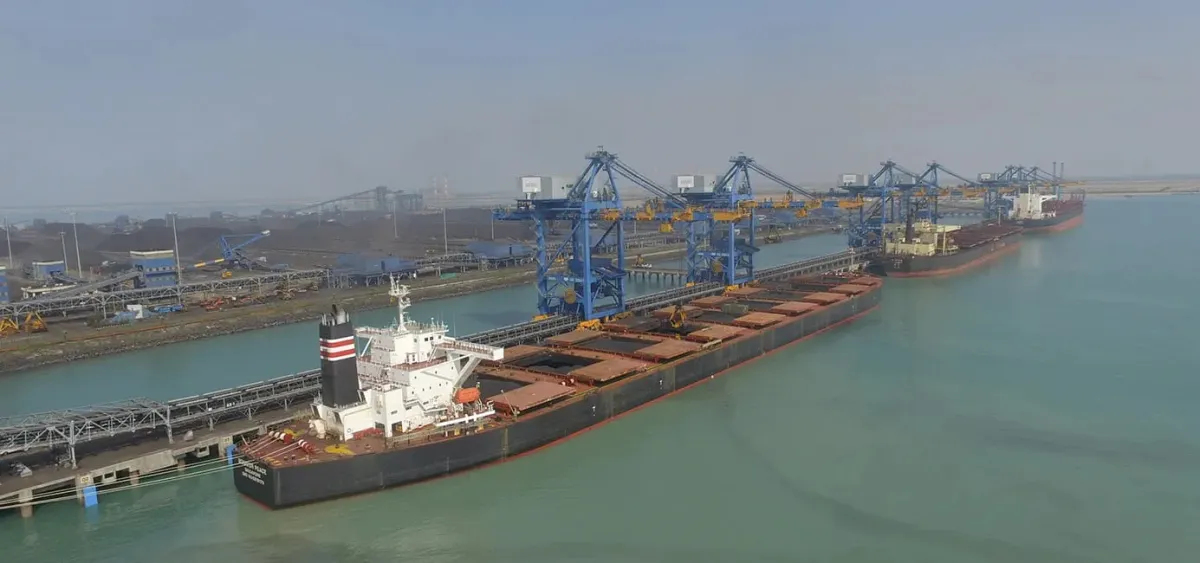
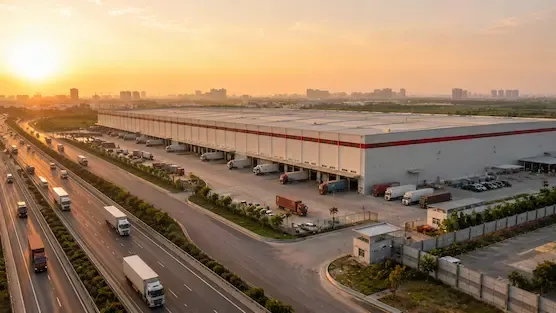
Modern logistics warehouse and distribution hub supporting India's growing supply chain and business infrastructure.
Not long ago, warehouses were rarely part of the national economic conversation.
Hidden on the outskirts of major cities, they were viewed simply as storage facilities where goods waited before reaching shops or factories. Investors paid little attention to them, and few people outside the logistics industry considered them an important driver of economic growth.
That perception has changed dramatically.
Across India, a quiet transformation is underway. Massive logistics parks, automated fulfillment centers, and integrated warehousing hubs are emerging along expressways and industrial corridors, creating a new layer of economic infrastructure that supports everything from online shopping to large-scale manufacturing.
As businesses race to deliver products faster and supply chains become increasingly sophisticated, warehouses are no longer just storage spaces—they are becoming strategic assets in India's next phase of growth.
The E-Commerce Effect
The rapid expansion of online retail has fundamentally altered the country's logistics landscape.
Consumers increasingly expect faster deliveries, wider product availability, and seamless order tracking. Meeting those expectations requires inventory to be positioned closer to population centers.
As a result, companies are investing heavily in regional distribution hubs capable of processing thousands of orders every day.
Industry analysts observe that modern warehouses now function more like technology-driven operations centers than traditional storage facilities. Automated sorting systems, digital inventory management, and data-driven logistics planning have become central to day-to-day operations.
The growth of e-commerce has therefore created demand not only for additional warehouse space but also for smarter and more efficient logistics infrastructure.
Also Read: Fractional Real Estate: How to Invest in Commercial Property with Just Rs. 10,000 in 2026
Infrastructure Is Changing the Map
The rise of large-scale warehousing has been closely linked to improvements in transportation infrastructure.
New expressways, freight corridors, and upgraded highway networks are reducing travel times and improving connectivity between manufacturing zones, ports, airports, and major consumer markets.
Businesses increasingly prefer logistics locations that offer direct access to multiple transport networks.
As these infrastructure projects expand, entirely new business clusters are emerging around strategic corridors.
Cities and regions that once played a limited role in national supply chains are gradually becoming important logistics destinations, attracting investment from manufacturing companies, retailers, and third-party logistics providers.
Manufacturing and the Supply Chain Shift
Warehousing growth is also being supported by India's broader manufacturing ambitions.
Modern factories depend on efficient supply chains that can move raw materials and finished products quickly across different parts of the country.
Large integrated logistics parks help reduce transportation delays, improve inventory management, and support more predictable production schedules.
Supply chain specialists note that reducing logistics friction can improve overall business competitiveness by lowering operational costs and increasing efficiency.
For manufacturers, the warehouse is no longer the final stop before delivery.
It has become an active part of the production ecosystem itself.
Technology Is Redefining Storage
The image of warehouses filled with endless shelves and manual paperwork is rapidly disappearing.
Many modern facilities now use advanced software systems to monitor inventory movement in real time. Barcode scanning, automated picking systems, artificial intelligence-driven demand forecasting, and robotics are increasingly becoming part of logistics operations.
This technological evolution is creating new employment opportunities beyond traditional warehouse roles.
Demand is rising for supply chain managers, data analysts, automation specialists, software engineers, and logistics planners who can operate within increasingly digital ecosystems.
The logistics industry is gradually transforming into a technology-enabled sector that combines physical infrastructure with intelligent data systems.
Why Investors Are Paying Attention
Commercial real estate investors have also taken notice of the sector's expansion.
Warehousing and logistics assets are increasingly viewed as long-term infrastructure investments supported by structural economic trends rather than short-term market cycles.
Steady demand from e-commerce companies, retailers, manufacturers, and logistics operators has strengthened interest in modern industrial properties.
Market observers point out that warehousing has evolved from a niche asset class into an important component of the country's commercial real estate landscape.
The sector's growth reflects broader changes in how goods move through an increasingly connected economy.
The Bigger Economic Story
The warehousing boom represents more than the construction of large buildings.
It reflects a deeper transformation in the way India produces, stores, and distributes goods.
As supply chains become faster and more integrated, logistics infrastructure will continue to influence investment decisions, industrial expansion, employment generation, and regional development.
The efficiency of a modern economy increasingly depends not only on what it produces, but also on how effectively it can move those products from factories to consumers.
In that sense, warehouses have quietly become one of the most important foundations of economic growth.
For decades, highways, airports, and railways dominated discussions around infrastructure development.
Warehouses rarely received the same attention.
Yet in today's digital economy, efficient logistics networks have become just as important as the roads and rails that connect them.
The rise of modern warehousing highlights a simple reality: economic growth is not built solely inside corporate boardrooms or factory floors. It is also built through the invisible systems that keep businesses moving and supply chains functioning.
As India continues to expand its manufacturing base and digital economy, the quiet revolution taking place inside its logistics sector may prove to be one of the defining business stories of the decade.