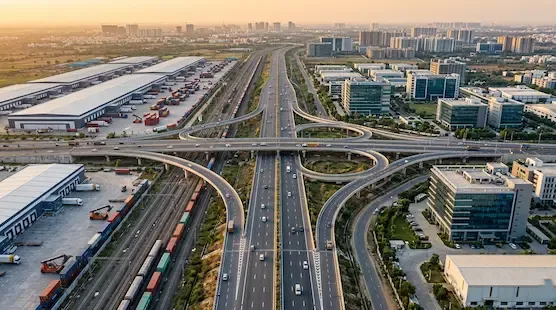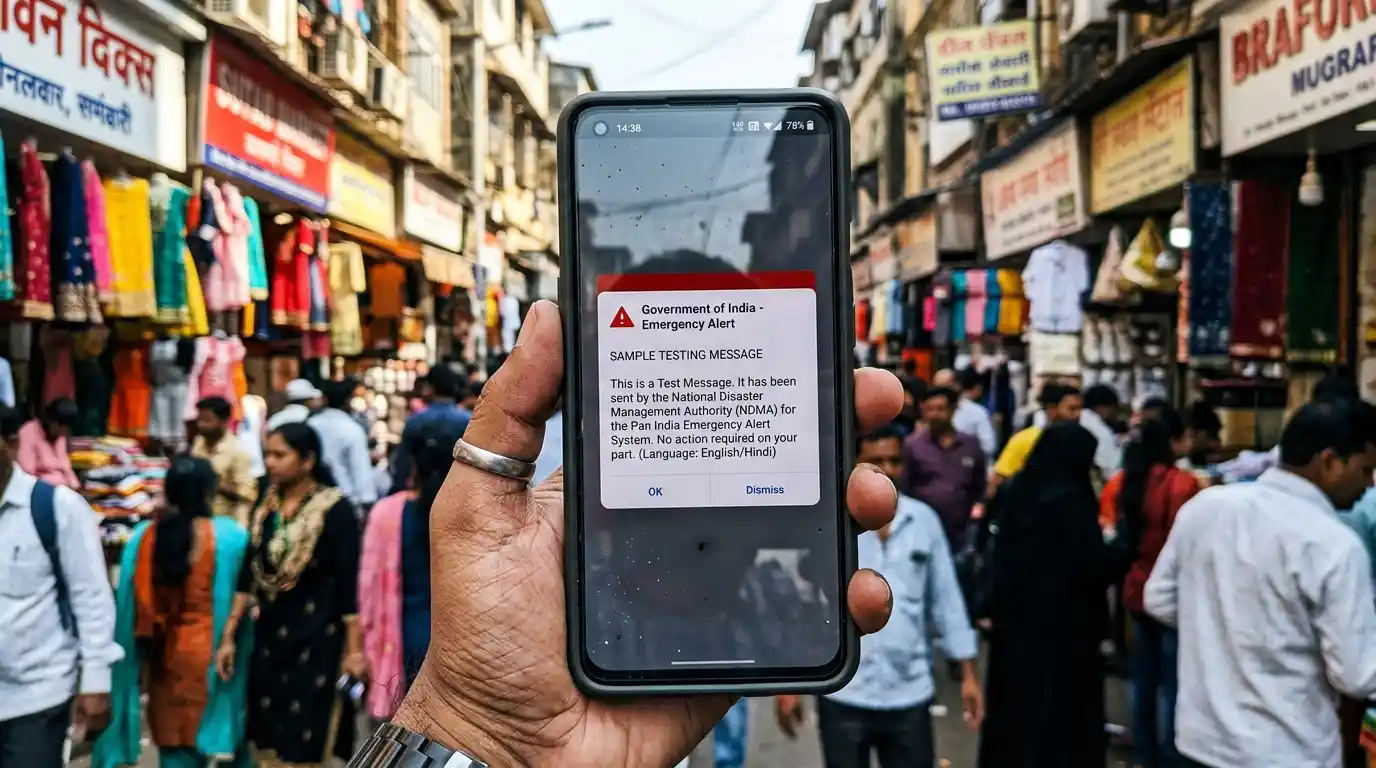
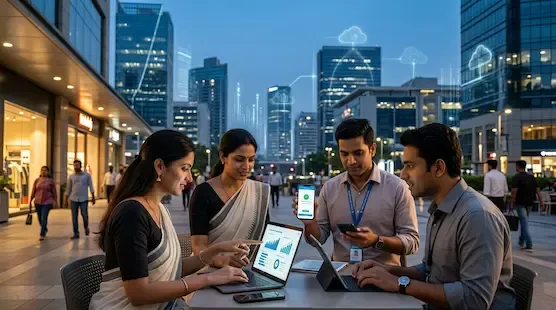
Indian professionals and entrepreneurs using digital technology, online payments, and modern business tools in a rapidly growing digital economy.
The transformation is visible almost everywhere.
A vegetable vendor in Nagpur accepts UPI payments with a simple QR code. A small manufacturer in Coimbatore manages inventory through cloud software. A student in a remote village attends online classes using a smartphone, while a startup founder in Bengaluru closes international deals through digital platforms without ever stepping into a traditional office.
These are no longer isolated examples of technological adoption.
They are signs of a much larger national transition.
India has emerged as the world's fifth most digitalised economy, reflecting years of rapid investment in digital infrastructure, financial technology, mobile connectivity, and online public services. What was once viewed as a developing nation's digital ambition is increasingly becoming one of its most significant economic strengths.
But beyond the impressive rankings and technology headlines lies a more important question: What does this transformation actually mean for businesses, workers, and the future of India's economy?
India's digital journey did not happen overnight.
Over the past decade, a combination of affordable smartphones, low-cost internet access, digital identity systems, online government services, and real-time payment infrastructure has fundamentally changed how citizens interact with the economy.
The explosive growth of UPI transformed digital payments from a niche urban convenience into an everyday national habit. Millions of small businesses that once operated entirely in cash now participate in the formal digital economy.
Also Read: From Memes to Movement: How Cockroach Janta Party Captured India’s Gen-Z Frustration
At the same time, rapid expansion of broadband networks and mobile internet access has connected regions that were previously underserved by traditional infrastructure.
The result is a digital ecosystem operating at a scale few countries can match.
For businesses, this connectivity has dramatically lowered barriers to entry. A small entrepreneur today can access customers, suppliers, marketing platforms, payment systems, and logistics networks with resources that would have been unimaginable just a decade ago.
The rise of digitalisation is changing the structure of Indian business itself.
Traditional industries are increasingly integrating software, automation, data analytics, artificial intelligence, and cloud computing into their daily operations. Retailers are adopting omnichannel sales models. Manufacturers are using digital monitoring systems to improve efficiency. Service providers are reaching customers through apps and online marketplaces.
For startups, the opportunities are even larger.
India's growing digital economy has created fertile ground for fintech platforms, software-as-a-service companies, health-tech ventures, ed-tech solutions, logistics networks, and AI-powered businesses.
Investors increasingly view digital infrastructure as the backbone of future economic growth.
The most valuable businesses of the next decade may not necessarily own the largest factories or office buildings. They may be the companies that control digital ecosystems, data intelligence, and platform-based services.
The impact on employment is equally significant.
Digitalisation is creating entirely new categories of work that barely existed a generation ago. Roles involving cybersecurity, cloud computing, artificial intelligence, data analytics, digital marketing, software engineering, user experience design, and platform management continue to expand.
At the same time, automation is reshaping traditional job functions.
Routine administrative work, repetitive data processing tasks, and basic operational functions are increasingly being assisted—or in some cases replaced—by software systems and AI-powered tools.
This shift is creating a clear divide in the labor market.
Workers with adaptable digital skills are finding new opportunities across industries, while those relying solely on traditional skill sets face growing pressure to reskill and remain competitive.
The future workplace is likely to reward continuous learning rather than static qualifications.
Despite the progress, India's digital success story remains uneven.
Access to technology, reliable internet connectivity, digital literacy, and advanced training opportunities still varies significantly across regions and income groups.
For many rural communities, digital infrastructure remains inconsistent. For millions of citizens, affordability and technological awareness continue to present barriers.
Experts warn that sustained economic growth will depend not only on expanding technology adoption but also on ensuring that the benefits of digitalisation are distributed more evenly across society.
A digital economy that leaves large segments of the population behind risks creating new forms of inequality.
The next chapter of India's digital journey is increasingly being shaped by artificial intelligence.
Businesses across sectors are experimenting with AI-driven customer support systems, predictive analytics, automation platforms, and intelligent workflow tools. Government agencies are exploring AI applications in public service delivery, healthcare, agriculture, and education.
The opportunities are enormous.
However, the transition also raises important questions regarding workforce adaptation, data privacy, cybersecurity, and ethical technology governance.
How India navigates these challenges may determine whether digitalisation becomes merely a technological achievement or a long-term economic advantage.
India's emergence as the world's fifth most digitalised economy is not simply a technology story. It is an economic story, a social story, and ultimately a human story.
The country's digital infrastructure has opened opportunities that were once unimaginable for entrepreneurs, students, small businesses, and ordinary citizens. It has expanded access, improved efficiency, and created entirely new avenues of economic participation.
Yet success should not be measured solely by digital transactions, smartphone penetration, or platform valuations.
The true test of digital progress is whether it improves the lives of people across every region, income level, and profession.
Technology is most powerful when it expands opportunity rather than concentrating it.
As India enters the next phase of its digital evolution, the challenge will be clear: building a future where innovation drives prosperity not for a select few, but for an entire nation.