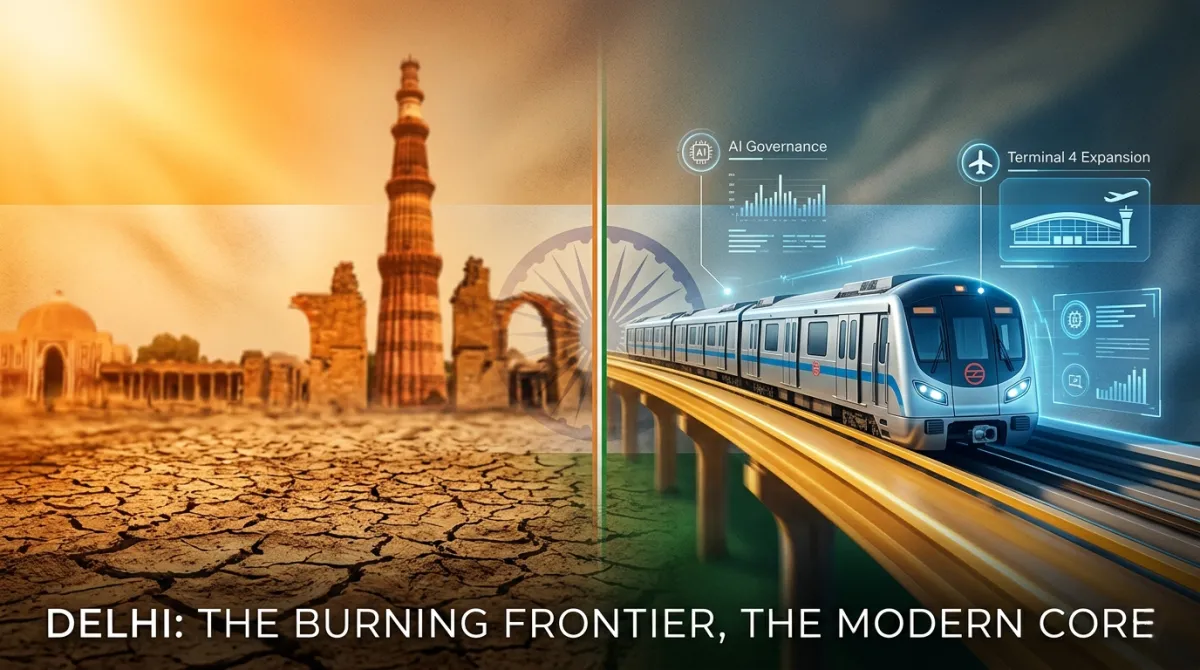
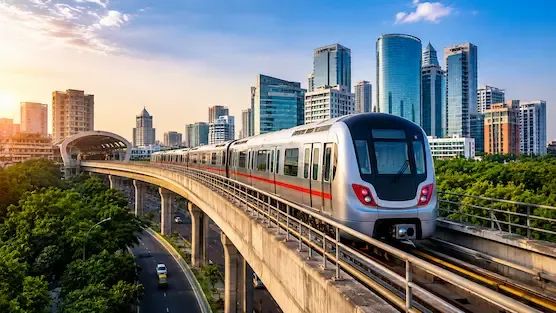
Modern metro rail network connecting urban areas across Delhi-NCR and supporting regional growth representative image.
For millions of people living across Delhi, Noida, Gurugram, Ghaziabad, Faridabad, and other parts of the National Capital Region, daily life begins and ends with a commute.
For years, traffic congestion, unpredictable travel times, and growing urban sprawl defined the experience of moving across NCR. Today, however, a different story is unfolding beneath the surface of the region's rapid expansion.
The growing reach of metro rail connectivity is quietly transforming how people travel, where they choose to live, and how businesses make investment decisions.
As new corridors, interchange stations, and regional transit links continue to expand, transportation is no longer just a public service. It has become one of the most influential drivers of economic activity and urban development in Delhi-NCR.
A Region Connected Like Never Before
Delhi Metro's growth over the past two decades has fundamentally reshaped mobility across the capital region.
What began as an urban transport solution has evolved into one of the world's largest metro networks, connecting residential hubs, business districts, educational institutions, industrial clusters, and major transit points.
For commuters, the impact is immediate.
Journeys that once required multiple modes of transportation and several hours can now be completed more efficiently through integrated metro corridors.
This improved accessibility has reduced dependency on private vehicles for many daily travelers while offering a more predictable alternative to congested road networks.
Changing Where People Live
Improved connectivity is also influencing residential decisions across NCR.
Areas once considered distant from major employment centers are increasingly attracting homebuyers and renters because of their access to metro infrastructure.
Urban planners note that transportation connectivity often becomes a major factor in real estate growth.
As metro lines extend further into surrounding regions, residential development tends to follow.
New housing projects, commercial spaces, retail hubs, and community infrastructure frequently emerge around stations, creating entirely new urban corridors.
This trend has been particularly visible in parts of Noida, Greater Noida, Gurugram, and Ghaziabad, where improved transit access has strengthened local economic activity.
Businesses Follow Connectivity
The influence of metro expansion extends beyond commuters and homebuyers.
Businesses increasingly view transportation accessibility as a strategic advantage.
Companies seeking office space often evaluate employee accessibility, customer convenience, and regional connectivity before making investment decisions.
Locations with strong transit infrastructure frequently attract higher levels of commercial development because they improve workforce mobility and reduce commuting challenges.
For employers, easier access to talent can enhance operational efficiency.
For employees, shorter and more reliable travel times can improve work-life balance and overall productivity.
Also Read: Delhi-NCR Transport Strike: Commercial Vehicles Off Roads; Commuters Stranded and Supply Chains Hit
The Economic Ripple Effect
Transportation infrastructure creates benefits that extend beyond mobility itself.
Metro systems generate economic activity through construction, operations, maintenance, retail opportunities, and associated urban development.
Improved connectivity can also strengthen regional integration by linking different economic centers more effectively.
As businesses, consumers, and workers move more efficiently, productivity gains can contribute to broader economic growth.
Economists often describe transportation infrastructure as a multiplier investment because its impact reaches multiple sectors simultaneously.
The expansion of transit networks can influence employment, real estate, retail activity, tourism, and long-term urban competitiveness.
Challenges Remain
Despite significant progress, transportation challenges continue to exist across Delhi-NCR.
Rapid population growth, increasing urbanization, first-mile and last-mile connectivity issues, and pressure on existing infrastructure remain important concerns.
Experts argue that future success will depend not only on expanding metro networks but also on improving integration with buses, regional rail systems, pedestrian infrastructure, and emerging mobility solutions.
A seamless transportation ecosystem requires coordinated planning across multiple agencies and jurisdictions.
As NCR continues to expand, efficient mobility will remain a critical policy priority.
The Future of Regional Mobility
The next phase of NCR's transportation story may involve deeper regional integration.
New transit corridors, multimodal hubs, smart mobility solutions, and enhanced connectivity between neighboring cities are expected to play a growing role in shaping how people move throughout the region.
The objective extends beyond reducing travel times.
It involves creating a more connected, productive, and economically competitive metropolitan region capable of supporting future growth.
For residents, businesses, and policymakers alike, connectivity is increasingly becoming one of the most valuable assets in the modern urban economy.
The transformation taking place across Delhi-NCR demonstrates how infrastructure can influence far more than transportation.
A metro line does not simply connect stations. It connects communities, employment opportunities, businesses, and economic potential.
As the National Capital Region continues to evolve, transportation infrastructure will remain one of the defining factors shaping its future growth trajectory.
The true success of connectivity projects will not be measured solely by kilometers of track or passenger numbers. It will be reflected in how effectively they improve everyday life, support economic development, and help build a more accessible and sustainable urban future.