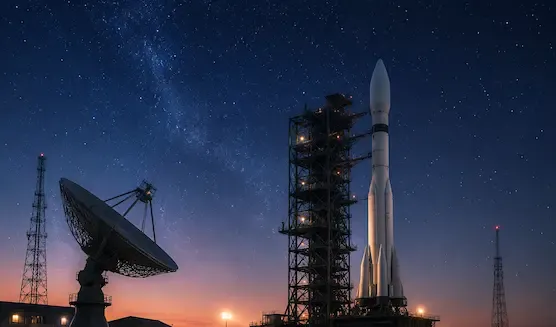
Futuristic space-tech launch facility with a rocket standing on a launch pad under a star-filled night sky, representing India’s growing private space technology ecosystem representative image.
At 2:40 AM inside a silent industrial warehouse on the outskirts of Hyderabad, a group of young aerospace engineers huddle around glowing computer monitors while a small rocket engine roars violently inside a test chamber nearby. There are no television cameras, no dramatic countdowns, and no national celebrations happening outside.
Yet what is unfolding inside these facilities may shape the next phase of India’s technological future far beyond Earth’s atmosphere.
For decades, India’s space ambitions were almost entirely associated with one towering institution: Indian Space Research Organisation, better known as ISRO. From launching low-cost satellites to executing globally respected lunar and Mars missions, ISRO built India’s reputation as a remarkably efficient space power operating on limited budgets.
But a new transformation is now unfolding quietly beneath the surface.
India’s space economy is no longer being driven only by government scientists. A rapidly growing ecosystem of private space-tech startups is entering the sector with aggressive ambitions involving satellite manufacturing, reusable rockets, defense surveillance systems, AI-powered orbital analytics, and commercial launch services.
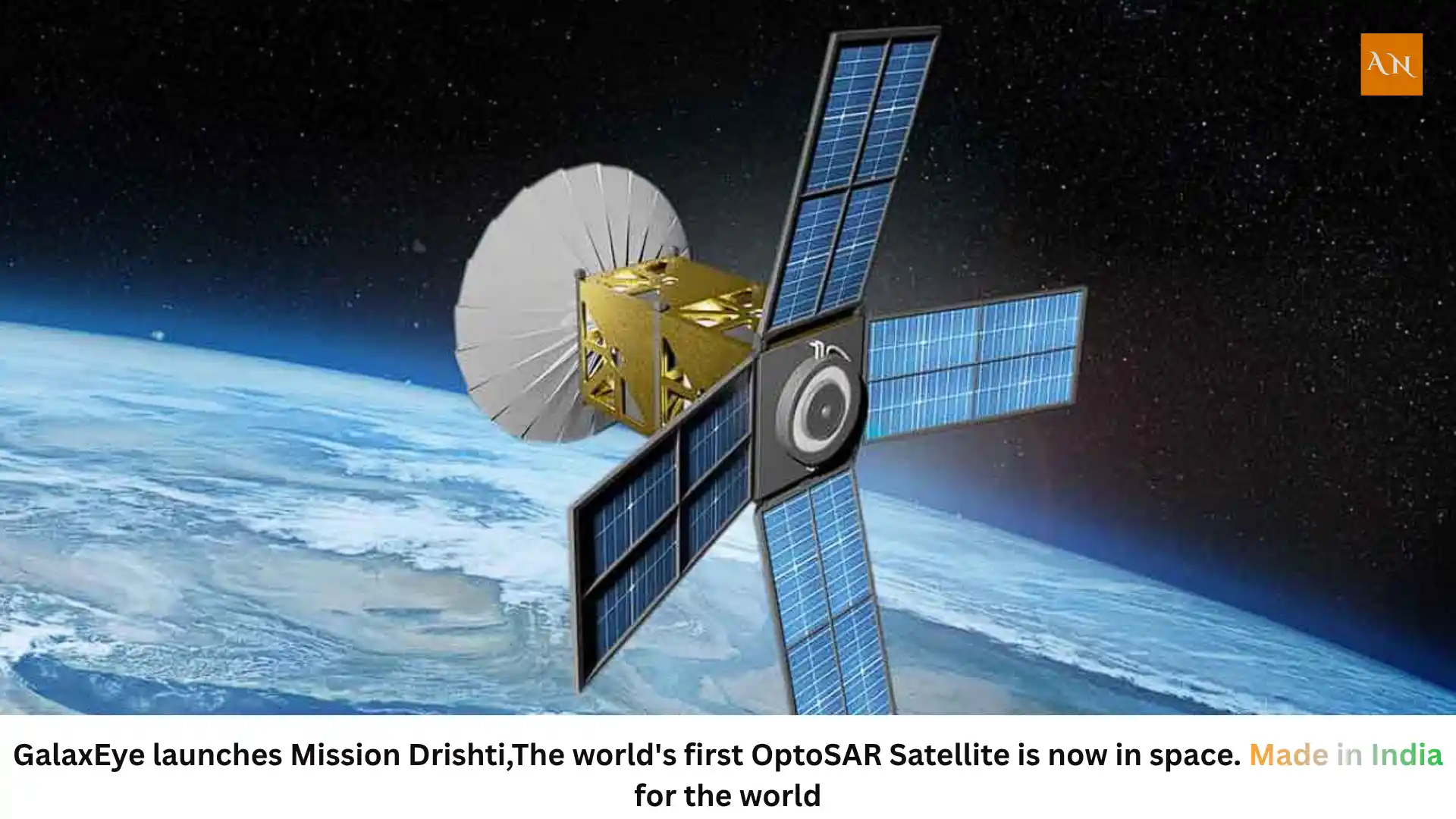
Also Read: Mission Drishti: India Launches World’s First OptoSAR Satellite in a Major Space Milestone
The Indian space race has officially entered its private era.
For years, India’s space infrastructure remained heavily centralized under government control. Private companies mainly functioned as manufacturing vendors supplying components to larger state-led missions.
That model changed dramatically after India opened portions of its space sector to private participation through structural policy reforms and regulatory support mechanisms designed to encourage commercial innovation.
Suddenly, a generation of aerospace entrepreneurs that once had no entry point into the sector found itself standing before an entirely new economic frontier.
Today, startups across Bengaluru, Hyderabad, Chennai, and Pune are building:
- miniature satellite systems,
- orbital imaging technologies,
- propulsion engines,
- launch vehicles,
- and deep-space communication platforms.
Global investors have taken notice.
To ordinary citizens, satellites often appear distant and abstract — objects floating invisibly above the atmosphere.
In reality, modern economies are becoming deeply dependent on space-based infrastructure.
Navigation systems, weather forecasting, internet connectivity, military surveillance, disaster management, agricultural mapping, aviation routing, digital banking synchronization, and telecommunications all rely heavily on satellites operating quietly in orbit.
As India’s digital economy expands, the strategic importance of domestic space capability has increased enormously.
This is especially critical in a geopolitical environment where control over space infrastructure is increasingly linked to national security and technological independence.
The private-space revolution is not happening only in India.
Globally, companies are racing to dominate what many analysts describe as the next trillion-dollar economic frontier. Reusable rocket systems, satellite internet networks, asteroid mining research, lunar exploration programs, and military-space technologies are attracting unprecedented investment worldwide.
India’s advantage lies in cost efficiency.
Much like the country’s rise in IT services decades ago, Indian aerospace startups are positioning themselves as low-cost, high-engineering-capability alternatives inside the global commercial space industry.
Also Read: Flying Taxis in India 2026: Mumbai to Pune in 20 Minutes? Routes, Fares, and Launch Dates
Several Indian firms are already attracting international contracts for satellite launches and aerospace manufacturing support.
Yet space technology is not like building a standard software startup.
It demands:
- enormous research capital,
- long development timelines,
- high engineering precision,
- and extreme regulatory compliance.
A failed app can be fixed with updates.
A failed rocket launch can destroy years of investment within seconds.
This creates intense pressure on India’s emerging private space ecosystem where founders must balance scientific ambition with commercial survival.
Talent competition is also intensifying. Aerospace startups are now competing directly with global AI firms, semiconductor companies, and multinational tech corporations for highly specialized engineering talent.
Space is no longer viewed purely as a scientific domain.
It has become a strategic geopolitical battleground.
Countries across the world are aggressively expanding satellite defense systems, anti-satellite capabilities, lunar exploration missions, and independent launch capacities to reduce reliance on rival nations.
For India, strengthening domestic space technology now carries implications far beyond scientific prestige — it is increasingly tied to defense capability, digital sovereignty, and economic resilience.
Officials connected to India’s growing commercial space ecosystem indicate that further regulatory frameworks supporting private launch infrastructure and commercial satellite operations are likely to expand over the coming years.
India’s private space-tech revolution represents something much larger than rockets and satellites. It reflects the country’s broader transition from a service-driven economy toward deep technological innovation. But true leadership in space will require more than patriotic excitement after successful launches.
It demands long-term investment, scientific patience, engineering education, and institutional trust in high-risk innovation. The next era of India’s growth may not be built only on highways and software parks — it may also be built quietly inside rocket-testing labs long before sunrise.