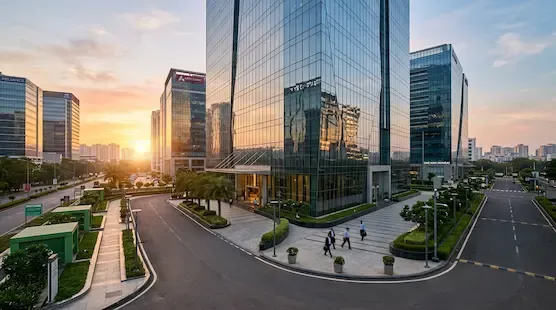
A sleek widescreen view of a modern, multi-story glass commercial tech park building in Navi Mumbai during early morning business hours representative image.
The strategic evaluation of enterprise operations inside Mumbai’s premium business zones is no longer focused solely on securing high-visibility office spaces within the iconic glass structures of the Bandra-Kurla Complex (BKC) or Nariman Point. Instead, corporate real estate directors and multi-national financial boards are actively shifting their focus toward massive, decentralized commercial business parks expanding rapidly across Navi Mumbai and Thane. A significant, structural re-alignment is sweeping through the Mumbai Metropolitan Region (MMR).
Skyrocketing rental premiums and high maintenance overheads in central micro-markets are quietly forcing major technology services, backend banking operations, and domestic shipping giants to aggressively migrate their operational workspaces to peripheral corporate corridors.
This ongoing corporate redistribution is reshaping commercial development metrics, making immediate logistical flexibility and cost optimization the primary benchmarks for next-generation enterprise expansions.
🔸 The BKC Cost Matrix and Peripheral Office Expansion
The primary mechanism driving this sudden commercial migration is the sharp, consecutive quarterly increase in lease costs per square foot across Mumbai’s central business zones. While established international banking hubs and elite law firms continue to anchor their executive boardrooms in central locations, managing expansive execution layers and large employee divisions within these high-premium areas has become financially inefficient.
Automated operational cost audits are pushing companies to decouple their front-office presentation layers from their core technical and analytical delivery centers.
This spatial separation has completely altered the commercial real estate dynamics of neighboring sectors. Portfolio managers and workspace infrastructure analysts observe that modern, Grade-A commercial developments along the Thane-Belapur road and inside Navi Mumbai’s transit-oriented complexes are experiencing unprecedented occupancy velocities.
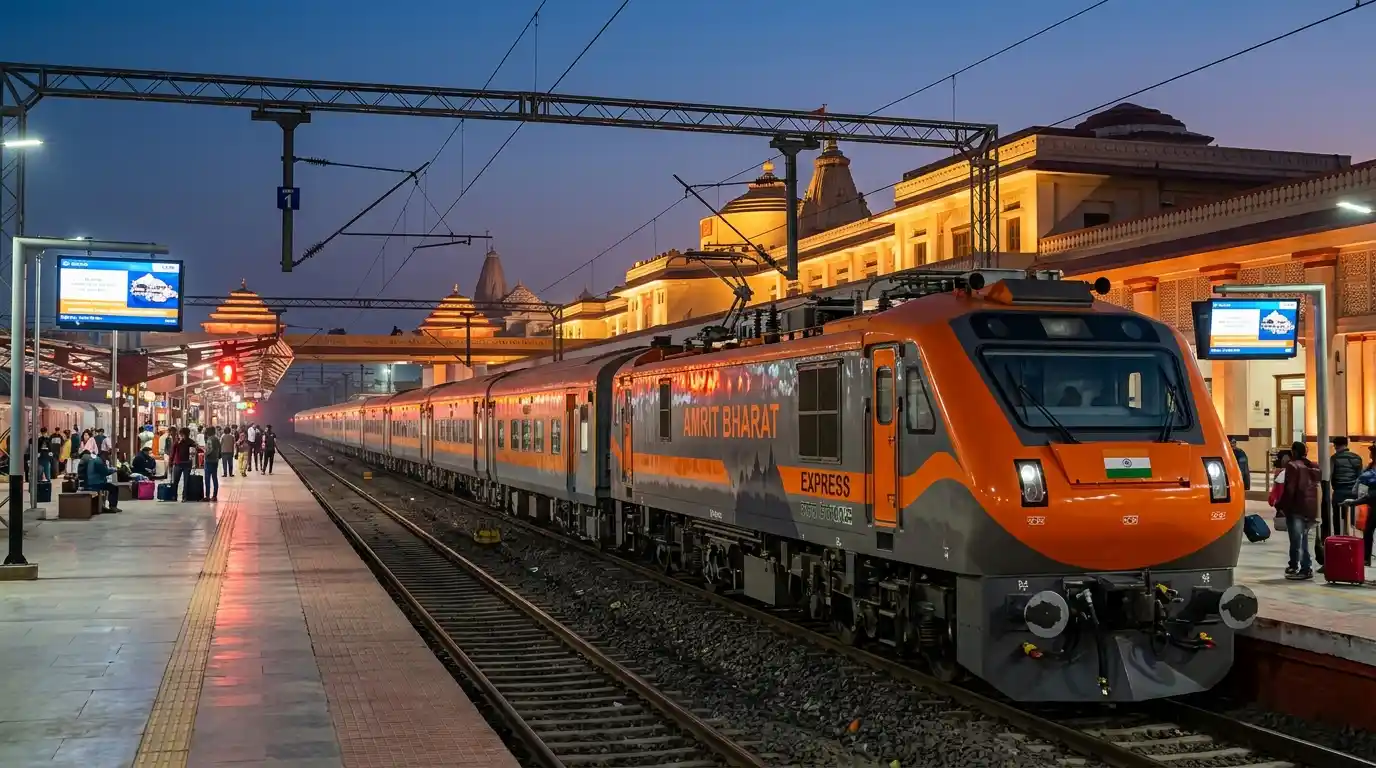
The emerging corporate directive across major financial syndicates suggests that immediate access to suburban rail networks and reduced lease-rental liabilities have completely surpassed traditional premium postal codes as the defining parameters for multi-year enterprise lease commitments.
🔸 Transit Transformation and Employee Demographic Alignment
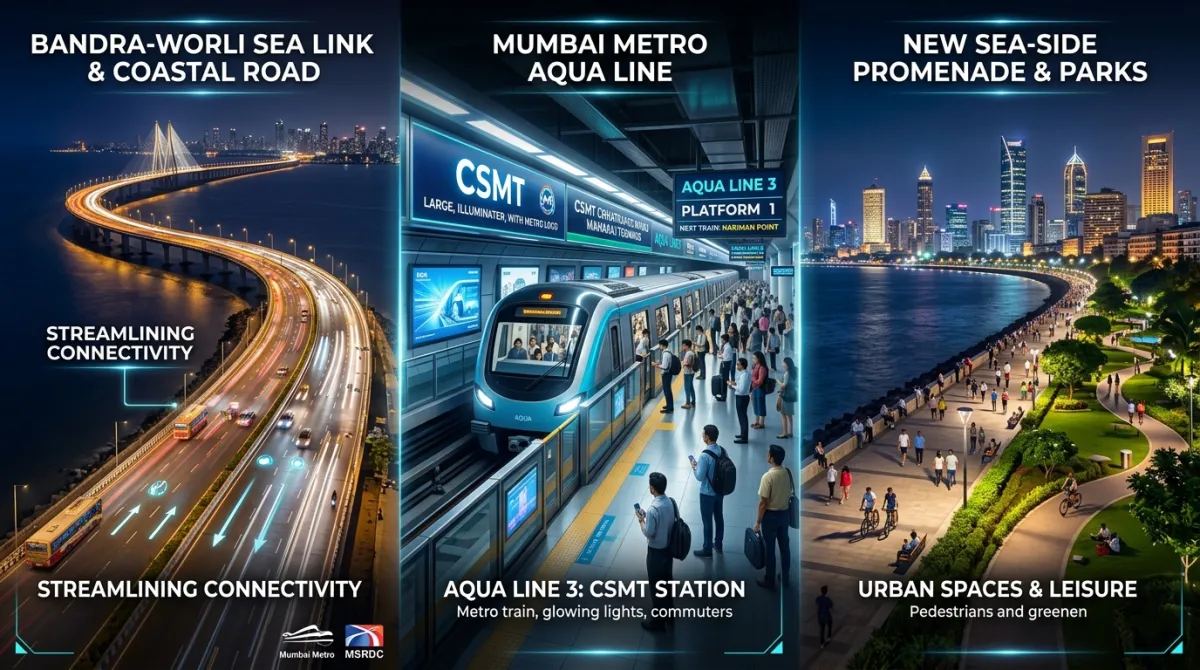
Consequently, this strategic relocation is heavily supported by the rapid commissioning of major regional infrastructure links, including the Mumbai Trans Harbour Link (MTHL) and expanding sub-regional metro lines.
These high-speed transit networks have significantly reduced commuting times between historic residential neighborhoods and new peripheral business zones, allowing companies to relocate without disrupting their primary talent pools.
For thousands of working professionals residing in central suburbs, commuting to an optimized tech park in Thane or Navi Mumbai has become far more predictable than navigating the saturated bottlenecks leading into central Mumbai.
Managing this sudden transition of human capital is emerging as an analytical victory for corporate logistics teams.
Internal coordination between regional development boards and private infrastructure developers said both sides are expected to accelerate the integration of high-volume feeder transit nodes in the coming months to stabilize peak-hour employee inflows and maintain high operational continuity across the new commercial destinations.
An economic ecosystem that assumes corporate wealth will infinitely absorb soaring real estate rentals without adjusting its geographic footprint is ignoring basic market dynamics. The visible migration of enterprise workspaces from central Mumbai to Thane and Navi Mumbai is a healthy, necessary democratization of regional development.
Mumbai’s global stature as a financial powerhouse isn't secured by inflating rent barriers around a single centralized corridor; it is sustained by building a highly accessible, interconnected metropolis where businesses can scale efficiently and employees can commute with dignity. True progress lies in developing robust, affordable parallel growth centers that distribute economic opportunities evenly across the entire metropolitan landscape.