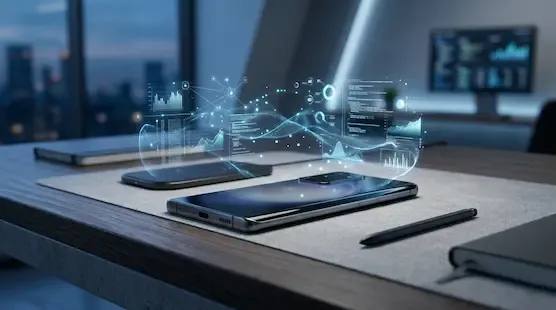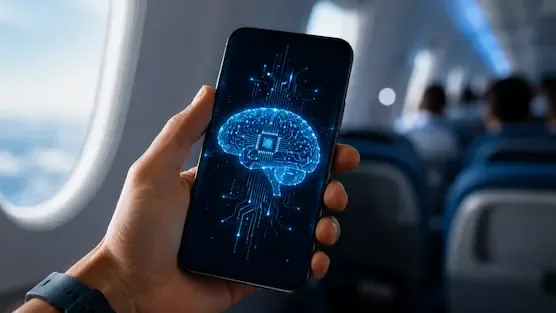

Modern smartphone showroom with consumers exploring premium gadgets and the evolving consumer technology market.
It is launch night inside a brightly lit premium electronics showroom in Mumbai. Giant LED screens flash cinematic product trailers while crowds gather around display tables to test the latest flagship smartphone. The device is thinner, slightly faster, equipped with a sharper camera sensor, and powered by a more advanced AI engine. Yet beneath the excitement, a quiet question hangs in the air among consumers:
Does this actually feel revolutionary anymore?
For more than a decade, the global consumer technology industry thrived on the promise of dramatic innovation. Every new smartphone generation introduced visible leaps in design, battery life, photography, display quality, or processing power. Upgrading devices felt transformative.
Today, that cycle is beginning to slow.
Modern gadgets are increasingly entering an era of incremental evolution rather than disruptive reinvention. Consumers are paying premium prices for devices that often deliver polished refinements instead of life-changing technological breakthroughs.
The result is a growing phenomenon quietly reshaping the global electronics market — upgrade fatigue.
The smartphone industry has reached a level of maturity that would have seemed unimaginable just a few years ago.
Also Read: The AI Phone Race: How On-Device AI is Changing the Smartphone Experience in India
Even mid-range devices now offer high-refresh-rate displays, multi-camera systems, fast charging, AI-assisted photography, and performance capabilities powerful enough for most daily tasks. The technological gap between premium flagship phones and affordable mid-tier devices is steadily shrinking.
This has fundamentally changed consumer psychology.
A few years ago, a three-generation-old smartphone felt noticeably outdated. Today, many users comfortably continue using devices that are four or even five years old without major compromises in everyday performance.
Manufacturers understand this problem.
As genuine hardware breakthroughs become harder to achieve annually, companies are increasingly focusing on ecosystem lock-ins, software intelligence, wearable integration, subscription services, and AI-powered personalization to convince users to remain inside their digital ecosystems.
The battle is no longer only about hardware.
It is about retaining long-term consumer attention.
Artificial intelligence has now become the centerpiece of modern gadget marketing.
Also Read: The AI Home Revolution of 2026: How to Turn Your Living Space into a Smart Ecosystem
From AI-powered photo editing and voice assistants to real-time translation, battery optimization, and predictive search systems, nearly every major technology launch today revolves around machine-learning capabilities.
Tech companies are aggressively positioning AI as the next transformational leap in personal electronics.
But many consumers remain divided.
While certain AI features offer genuine convenience, critics argue that some functions feel more like marketing demonstrations than essential everyday tools. In many cases, users interact with these features briefly before returning to traditional usage patterns.
Industry analysts believe the larger challenge facing gadget manufacturers is psychological rather than technological.
Consumers no longer upgrade devices simply because a newer version exists. They upgrade only when the improvement feels emotionally meaningful.
That emotional gap is becoming increasingly difficult to create.
At the same time, flagship gadget pricing continues climbing aggressively.
High-end smartphones, laptops, foldable devices, gaming systems, and wearable technology products are steadily entering luxury pricing territory, especially in markets like India where import duties and taxation significantly inflate final retail costs.
This growing price pressure is forcing consumers to rethink purchasing habits.
Instead of upgrading every year, users are increasingly extending device replacement cycles, investing in repairs, battery replacements, and refurbished electronics markets.
The second-hand gadget economy is expanding rapidly as consumers search for better value without sacrificing premium-level performance.
For younger buyers especially, technology purchasing decisions are becoming more financially strategic than aspirational.
Perhaps the most important shift inside the gadget industry is the transition from standalone products to interconnected digital ecosystems.
Modern consumers are no longer purchasing only smartphones. They are entering entire technology environments involving smartwatches, wireless earbuds, cloud subscriptions, smart home devices, fitness platforms, and synchronized software services.
Once users become deeply integrated into a single ecosystem, switching brands becomes increasingly inconvenient.
This strategy has become one of the most powerful long-term business models in consumer technology.
The goal is no longer simply to sell devices.
The goal is to create digital dependency.
The slowdown in revolutionary innovation is also reviving conversations around electronic waste and environmental sustainability.
Every year, millions of smartphones, accessories, chargers, batteries, and gadgets are discarded globally despite remaining partially functional.
Environmental experts argue that the industry’s aggressive upgrade culture has contributed significantly to rising e-waste generation and unsustainable consumption patterns.
In response, governments and consumer rights groups across multiple countries are increasingly pushing for stronger “Right to Repair” regulations that allow users easier access to spare parts, battery replacements, and independent repair ecosystems.
The movement reflects a broader cultural shift.
Consumers are beginning to question whether constant upgrading is truly necessary.
The modern gadget industry stands at a fascinating crossroads. Technological progress continues at extraordinary speed, but consumer excitement is no longer guaranteed by annual product launches alone.
The era when every new smartphone felt revolutionary is slowly fading.
Today’s users are smarter, financially cautious, and increasingly aware of the difference between meaningful innovation and carefully engineered marketing cycles.
Artificial intelligence, ecosystem integration, and software intelligence will undoubtedly define the next phase of consumer technology. But the companies that truly lead the future may not be those that release the most devices — they may be the ones that build products capable of lasting longer, respecting consumer trust, and delivering genuine long-term value.
Because in the end, the most powerful technology is not the one that demands constant replacement.
It is the one people genuinely want to keep using.