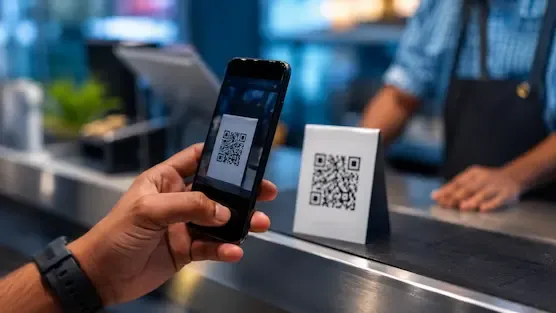
Smartphone scanning a QR code representing digital payments and online security awareness.
A few years ago, QR codes were viewed as one of the biggest symbols of India's digital transformation.
From roadside tea stalls and vegetable markets to airports and luxury shopping malls, the small black-and-white square became an everyday part of life. Paying bills, ordering food, parking vehicles, donating to charities, and even accessing restaurant menus gradually shifted from cash and paperwork to a quick smartphone scan.
The convenience was undeniable.
But as India's digital payment ecosystem expanded at unprecedented speed, cybercriminals quietly found a new opportunity hiding in plain sight.
Today, security researchers and cybercrime investigators warn that QR-code-based fraud is becoming one of the fastest-evolving forms of social engineering, exploiting the trust that consumers have developed around digital payments.
Also Read: AI Is Managing More of Your Life Than You Think — And Most People Don't Even Notice
A Technology Built for Convenience
The success of QR payments transformed the way millions of Indians interact with money.
Digital payment platforms simplified transactions for small businesses and consumers alike, reducing the need for cash while making financial services more accessible.
According to industry observers, this widespread adoption also created a psychological habit: people often scan first and think later.
Unlike traditional online banking, where users actively type account numbers or payment details, QR transactions feel almost automatic. A quick scan followed by a confirmation screen can take only a few seconds.
Cybersecurity professionals say that speed and familiarity are precisely what fraudsters attempt to exploit.
The Rise of the Fake QR Sticker
One of the simplest methods involves replacing genuine merchant QR codes with counterfeit versions.
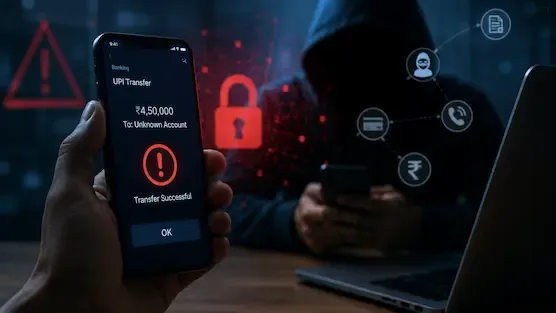
A customer believes they are paying a local business, but the money is actually transferred to an unrelated account controlled by scammers.
In crowded public spaces, parking areas, temporary event stalls, and small retail outlets, such sticker replacement scams can go unnoticed for extended periods before being discovered.
The challenge for victims is that the transaction itself often appears legitimate. The payment is successful—the destination is simply wrong.
Also Read: Inside India’s AI Robotics Push as Humanoid Machines Enter Real-World Workplaces
Beyond Payments: The New Generation of QR Scams
Digital safety experts note that modern QR fraud has evolved far beyond simple payment redirection.
Fake courier notifications, fraudulent customer support messages, social media advertisements, and counterfeit promotional offers increasingly use QR codes to lure users toward malicious websites.
Once scanned, these links may direct individuals to fake login portals designed to collect banking credentials, passwords, or personal information.
Some schemes even encourage users to install remote-access applications, allowing criminals to gain control over smartphones under the guise of technical support.
Unlike traditional phishing emails, QR-based attacks can bypass a user's instinct to carefully inspect suspicious web addresses because the destination remains hidden until after the scan.
Why Human Psychology Remains the Weakest Link
Technology specialists often point out that the biggest vulnerability in cybersecurity is not software—it is human behavior.
Scammers rarely rely on advanced hacking techniques alone. Instead, they create urgency and trust.
A delivery problem that needs immediate action.
A discount available for a limited time.
A parking payment that must be completed before leaving.
A charity campaign appealing to emotion.
The objective is to push individuals into making quick decisions before they have time to verify what they are scanning.
As digital transactions become deeply embedded in daily routines, these moments of automatic trust create opportunities for fraud.
Also Read: Inside India’s Space-Tech Boom: Rockets, Satellites, and the New Innovation Frontier
Building Better Digital Habits
Cybersecurity awareness campaigns increasingly emphasize that QR codes should be treated with the same caution as unknown internet links.
Consumers are encouraged to verify merchant details before confirming payments, avoid scanning random codes placed in public areas, and carefully review transaction information displayed within payment applications.
Security professionals also advise against scanning QR codes received through unsolicited messages from unknown sources.
In many cases, a few extra seconds spent verifying information can prevent significant financial losses.
The Bigger Digital Safety Challenge
The growing popularity of QR scams reflects a broader reality of the digital economy.
Every major technological convenience eventually attracts criminal adaptation.
As payment systems become faster and more seamless, fraud techniques evolve alongside them.
The challenge for consumers is no longer simply learning how to use digital tools. It is learning how to use them safely.
India's digital transformation has created enormous opportunities for innovation, entrepreneurship, and financial inclusion. Protecting those gains will increasingly depend on strengthening public awareness alongside technological advancement.
Akhand News Viewpoint
The rise of QR-code fraud is not an argument against digital payments. It is a reminder that convenience should never replace caution.
Technology has made everyday transactions easier than ever before, but it has also compressed the time people spend verifying what they are doing. Cybercriminals understand this behavioral shift and design their schemes around moments of distraction and trust.
The future of digital safety will not be decided solely by stronger encryption or smarter software. It will depend equally on creating a culture where users pause, verify, and think before they scan.
In an increasingly connected world, the simplest security habit may also be the most valuable one.